
Look Up Eugene Property Tax Records
Eugene property tax records are kept by Lane County Assessment and Taxation. The city does not maintain its own property tax database. Lane County assesses all property in Eugene, sends out tax bills, and collects payments on behalf of every taxing district. Residents can search Eugene property tax records online using the county portal. This page explains how to find your records, review your assessment, and appeal if needed.
Lane County Manages Eugene Tax Records
Oregon law places property tax duties with the county, not the city. Under ORS Chapter 306, county assessors appraise and assess all taxable parcels. Lane County carries out this role for Eugene and every other community within its borders.
The Lane County Assessment and Taxation office sits at 125 East 8th Avenue in Eugene. Staff handle assessments, exemptions, tax collection, and ownership records for all property in the county. Eugene property owners contact this office for questions about values, bills, or payment plans. The office is open Monday through Friday.
Eugene receives a portion of property tax revenue through the county distribution system. Taxes fund city services like police, fire, parks, and the library. But the city plays no direct role in setting values or collecting payments. Everything flows through Lane County.
Search Eugene Property Tax Records Online
Lane County offers a free online property search at lanecounty.org. You can look up any Eugene property by address, owner name, or map and tax lot number. The system works around the clock.
Search results show assessed values, real market values, and maximum assessed values for each Eugene parcel. You can view current and past tax statements with breakdowns by taxing district. Property details include lot size, building square footage, year built, and construction type. Many records also include photographs of the property to help with identification.
Sales history is available showing past transfers with dates, prices, and document references. This data helps Eugene residents prepare for valuation appeals or track market trends in their area. The system also supports electronic delivery of tax statements, so you can sign up to get your bill by email instead of regular mail.
The Eugene Finance Department provides information about how property tax revenues support city operations, though all tax records come from the county.
The screenshot below shows the Lane County property search portal used by Eugene property owners.
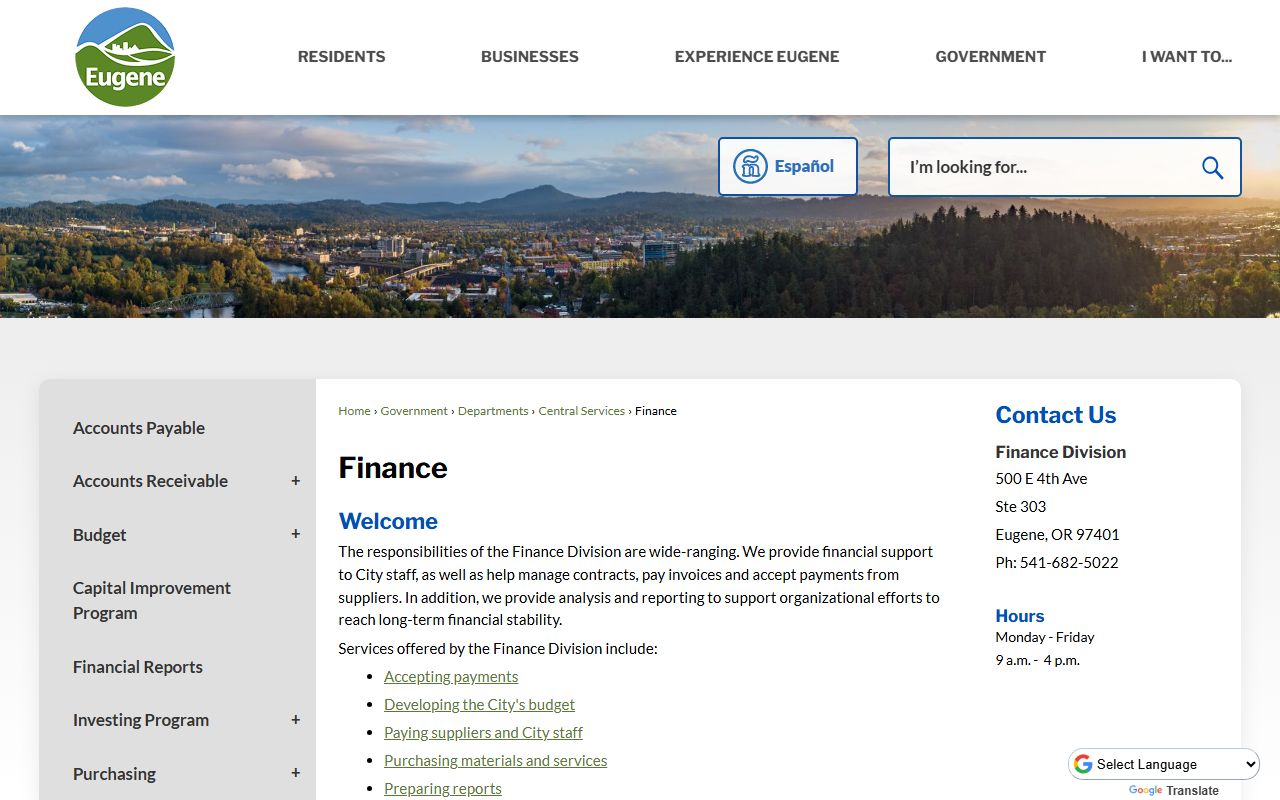
This county tool gives Eugene residents direct access to their assessment data and tax payment history.
Eugene Property Tax Values Explained
Three values appear on every Eugene property tax record. Real Market Value (RMV) is the estimated sale price as of January 1. Maximum Assessed Value (MAV) was created by Measure 50 in 1997 and grows at most 3% per year under ORS 308.156. Assessed Value (AV) is the lesser of the two, and it determines your tax bill.
Most Eugene homes have a gap between RMV and MAV. If your home is worth $400,000 on the market but your MAV is $250,000, you pay taxes on $250,000. This gap has widened in Eugene as home prices climbed faster than 3% each year. New construction gets valued using a changed property ratio that aligns new homes with existing ones in the same area.
Measure 5 adds rate limits on top of the value caps. General government rates cannot exceed $10 per $1,000 of RMV. School rates are capped at $5 per $1,000. When combined levies push past these limits, compression kicks in and reduces the total collected. Some Eugene tax code areas experience compression each year.
Note: The changed property ratio varies by county and property class, so it differs from one year to the next in Lane County.
Eugene Property Tax Payments
Lane County sends tax statements to Eugene property owners in late October. The full amount is due by November 15 if you want the early payment discount. A two-payment plan splits the bill between November and February. A three-payment plan adds a May installment. Late payments accrue interest.
Payments go to Lane County, not the City of Eugene. You can pay online, by mail, in person at the county office, or through drop boxes. The county accepts credit cards, debit cards, checks, and cash for in-person payments. Online and phone payments are processed through the county website.
Appeal Eugene Property Tax Assessments
Eugene property owners who believe their assessment is wrong can appeal to the Lane County Property Valuation Appeals Board (PVAB). The deadline is December 31 of the year you receive your tax statement. Appeals filed after that date will not be heard.
Lane County encourages an informal review first. Contact the assessor's office to discuss your concerns. Staff can explain how they valued your Eugene property and fix any factual errors. Many disputes get resolved without a formal appeal.
If informal review does not resolve your concern, file a formal appeal with the county clerk. You need to identify the value in question and provide supporting evidence. Good evidence for Eugene appeals includes:
- Recent sales of similar homes in your Eugene neighborhood
- An independent appraisal from a licensed appraiser
- Documentation of property damage or defects
- Market analysis from a real estate professional
The PVAB holds hearings from February through April. Board members are citizen volunteers trained in property assessment law. You can appear in person, send written testimony, or have someone represent you. The board sends a written decision after the hearing.
Decisions can be appealed to the Oregon Tax Court within 30 days. The Magistrate Division charges a $281 filing fee. Evidence must support market value as of January 1 of the assessment year.
Eugene Property Tax Exemptions
Lane County administers several exemption and deferral programs that can lower the tax burden for eligible Eugene homeowners. All applications go through the county assessor's office.
Senior citizens and people with disabilities may qualify for a property tax deferral. This program postpones tax payments until the home is sold or ownership changes. Disabled veterans can receive a partial or full exemption on their primary residence. Farm and forestland in or near Eugene may qualify for special assessment under separate statutes. Enterprise zones offer incentives for qualifying business investment within designated areas.
Under ORS 307.030, all real property faces assessment and taxation unless a specific legal exemption applies. Each program has its own deadlines and rules. The Lane County office at 125 East 8th Avenue can provide forms and answer eligibility questions for Eugene residents.
The Oregon Department of Revenue provides statewide guidance on all exemption programs, as shown below.
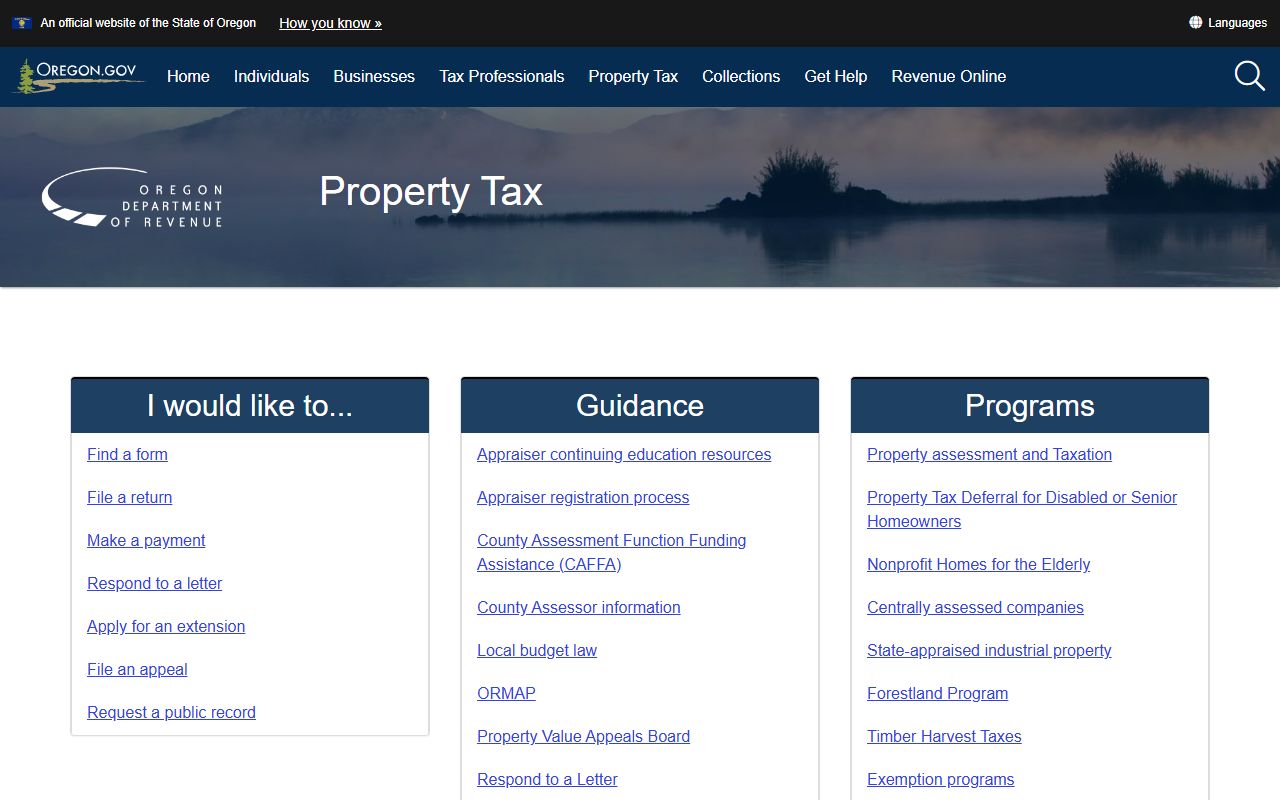
State resources help Eugene property owners understand which programs may apply to their situation.
Eugene Recorded Property Documents
Lane County also records deeds, mortgages, liens, and other documents that affect property ownership in Eugene. The recording office at 125 East 8th Avenue accepts documents Monday through Friday. E-recording is available through approved vendors for title companies and attorneys.
Recorded documents create the chain of title for each Eugene parcel. Public access terminals at the county office allow anyone to search recorded indices from 1965 to the present. Documents must meet state formatting and notarization standards to be accepted. The county also maintains GIS maps and digital tax lot data through its cartography section.
Note: Older Eugene property records may be available on microfilm or through the Oregon State Archives in Salem.
Lane County Property Tax Records
Eugene is part of Lane County, which manages all property tax records for the city. For complete information on county services, office hours, payment options, and the full appeals process, visit the Lane County property tax records page.