
Oregon Property Tax Records
Oregon property tax records are public documents held by county assessors in all 36 counties. These records show property values, tax amounts, and ownership details for every parcel in the state. County assessors appraise land and buildings each year and set the real market value used to calculate taxes. You can search Oregon property tax records online through county assessor websites or visit a county office in person. The Oregon Department of Revenue oversees the statewide property tax system and sets the rules that all counties follow. Use this page to find property tax records for any county or city across Oregon.
Oregon Property Tax Quick Facts
Oregon Property Tax System
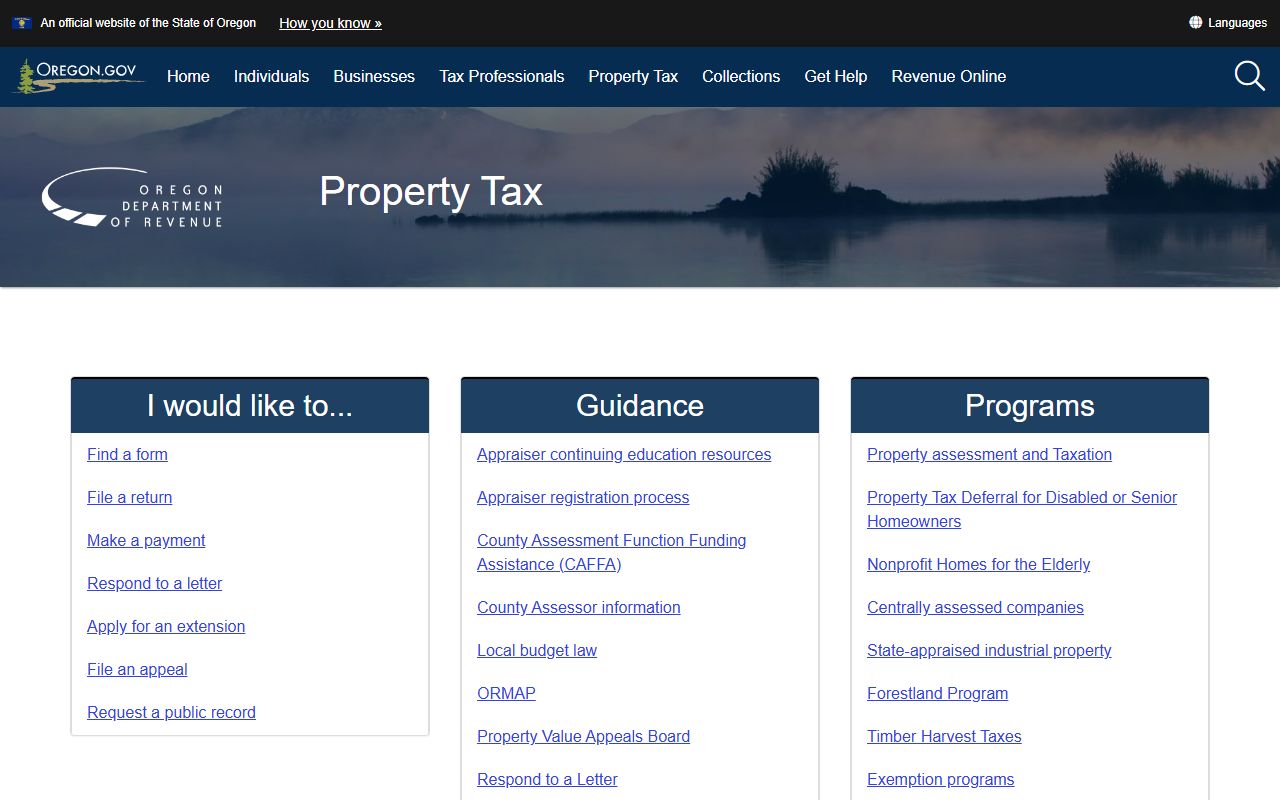
The Oregon Department of Revenue oversees property tax across all 36 counties. Each county has its own assessor. That assessor values land, homes, and business property for tax purposes. The state sets the rules and counties carry them out. The Oregon Department of Revenue Property Tax Division provides guidance to every county assessor and tax collector in Oregon. Staff from the department train county employees and review their assessment practices through annual ratio studies. These studies compare assessed values to actual market values and help keep Oregon property tax records accurate and fair across all counties.
The department also handles property that crosses county lines. Railroads, utilities, and large industrial sites are appraised directly by the state through central assessment. The Department of Revenue determines those values and allocates them to individual counties for collection. This process makes sure complex properties get assessed fairly across Oregon.
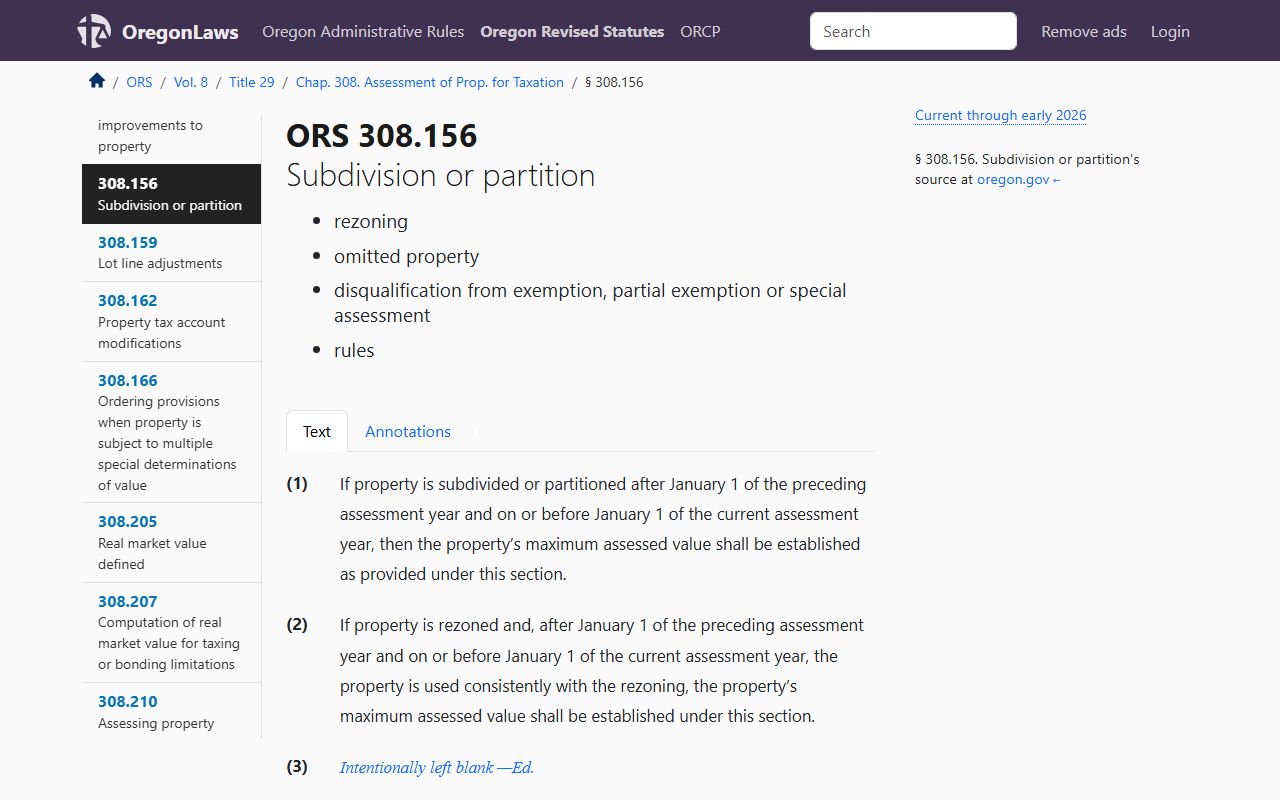
Oregon voters reshaped the property tax system with two landmark ballot measures that still govern how property tax records work today. Measure 5 passed in 1990 and set permanent tax rate limits of $5 per $1,000 of real market value for schools and $10 per $1,000 for general government. Measure 50 followed in 1997 and created the Maximum Assessed Value system. Under ORS 308.156, the maximum assessed value can only increase by 3% per year for most properties unless there is new construction or a major change. This cap gives property owners stability in their tax bills even when home prices rise much faster. When taxes hit the Measure 5 rate limits, a process called compression reduces levies among all taxing districts in the code area.
Three values matter in Oregon property tax records. Real Market Value is what a property would sell for on the open market. Maximum Assessed Value is the capped figure under Measure 50. Assessed Value is the lesser of those two numbers, and your tax bill is based on it. Tax statements go out in late October each year and list the assessed value, tax rate, and total taxes owed. Oregon law under ORS 306.255 requires that every statement include information about your right to appeal, so property owners always know their options.
Access Oregon Property Tax Records
County assessor websites are the best starting point for finding property tax records in Oregon. Most of the 36 counties offer online search tools that let you look up records by address, owner name, or tax lot number. Search results typically show assessed values, real market values, tax amounts, property details, and payment status. Many Oregon counties also let you view full tax statements, download documents, and make payments through their online portals. The experience varies by county since each one maintains its own system, but the core property tax data is available online for nearly every parcel in Oregon.
Oregon property tax records typically include:
- Assessed value and real market value
- Tax amounts broken down by district
- Ownership history and sales data
- Property size, lot dimensions, and building details
- Maximum assessed value calculations
The Oregon Department of Revenue also handles public records requests for state-level property tax data including assessment rolls, tax statistics, and administrative documents. You can sign up for Revenue Online to view your own tax records without filing a formal request. For third-party requests, the department responds within five business days to acknowledge receipt and provide information about any fees involved.
Oregon also operates the ORMAP system for statewide property mapping. This digital parcel map covers all 36 counties and shows tax lot boundaries along with ownership data. County assessors update the information regularly. The system moved Oregon from paper Mylar maps to a modern computer-based platform. Under ORS 306.125, the Department of Revenue maintains shared record systems for assessors and tax collectors statewide, with counties sharing in the cost. These tools help keep Oregon property tax records consistent from one county to the next.
Property Tax Assessment in Oregon
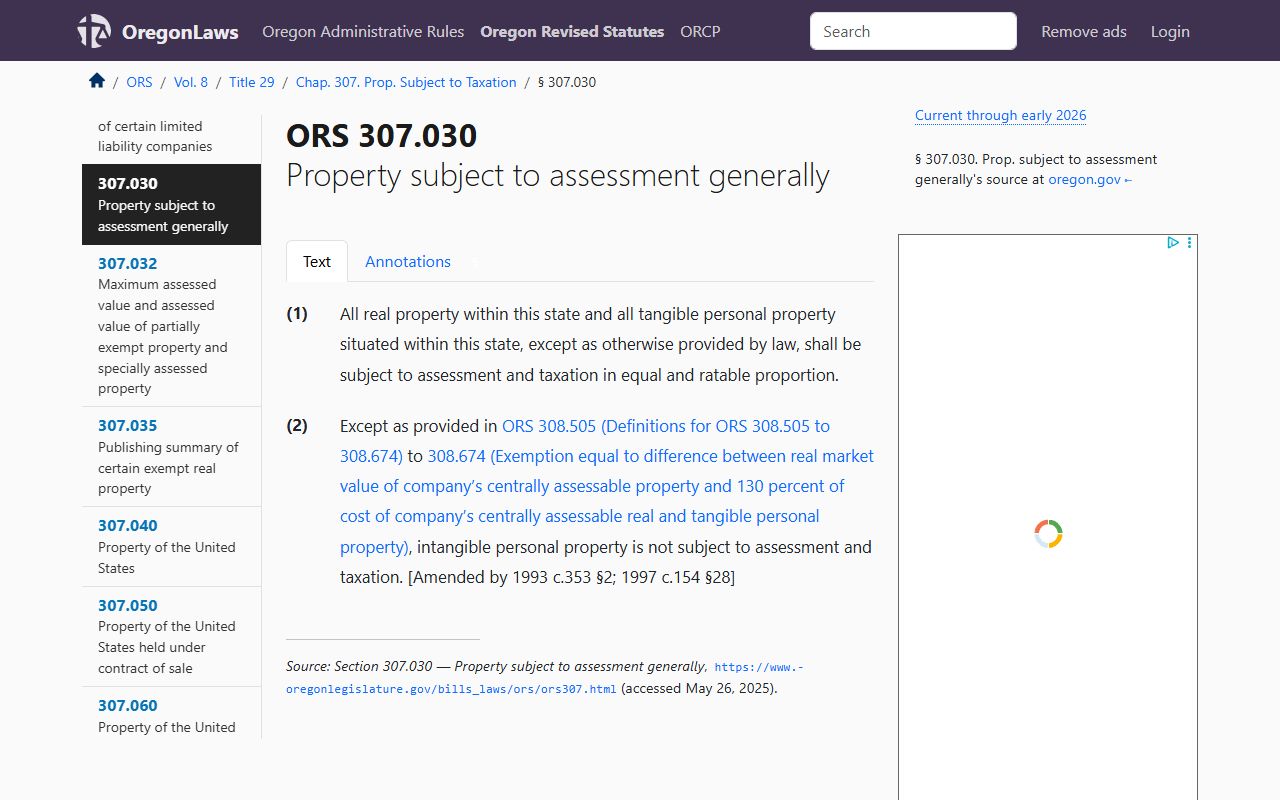
All real property in Oregon is subject to assessment and taxation under state law. ORS 307.030 requires that land, buildings, and fixed equipment be assessed at their value in equal and ratable proportion. Business personal property is also taxable in Oregon. However, household items, personal cars, and crops are not subject to property tax. A business owning personal property must file a return with the county assessor by March 15 each year. County assessors value each parcel as of January 1 using market data, comparable sales, and property inspections to arrive at a fair number for every entry in Oregon property tax records.
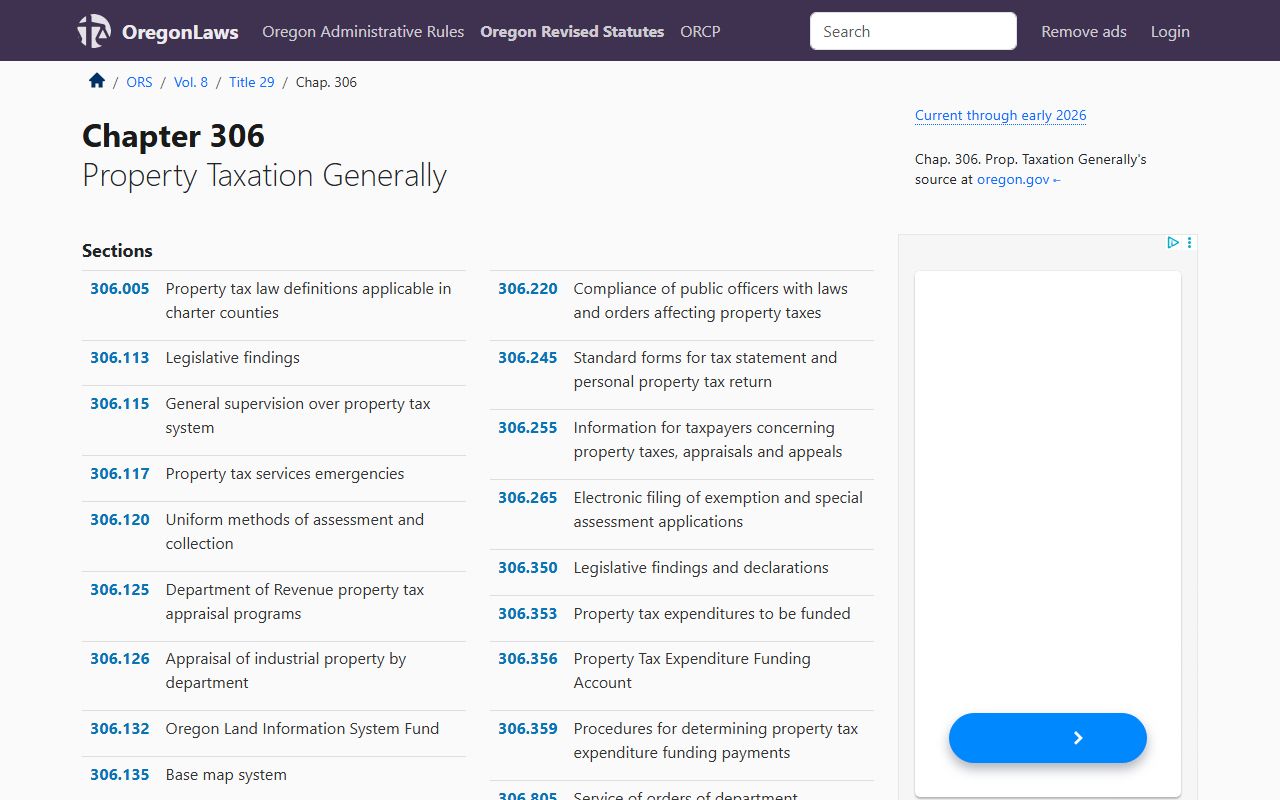
The state requires standardized forms for tax statements under ORS 306.245. These forms must show property values, tax calculations, and taxpayer rights so that every property owner in Oregon receives clear and complete information. Several exemption programs also reduce the tax burden for qualifying owners. Senior citizens may defer property taxes on their homes. Veterans can receive exemptions. Farm and forestland owners may qualify for special assessment rates that lower their bills. Religious and charitable organizations are eligible for certain exemptions as well, though each program has its own rules and application deadlines at the county level.
Note: Having a 501(c)(3) tax-exempt status does not automatically exempt a property from Oregon property taxes.
Oregon Property Tax Appeals
Property owners who disagree with their assessment can challenge it through a formal process in Oregon. Start by contacting the county assessor directly. Many concerns get resolved through informal discussion without any paperwork. If the assessor cannot resolve the issue, the next step is to file a formal appeal with the Property Valuation Appeals Board in your county. You must file after tax statements go out in late October but before December 31 of each year. The board hears cases between February and April. You can appear in person or submit written testimony along with evidence such as comparable sales data, independent appraisals, or a detailed market analysis prepared by a real estate professional.
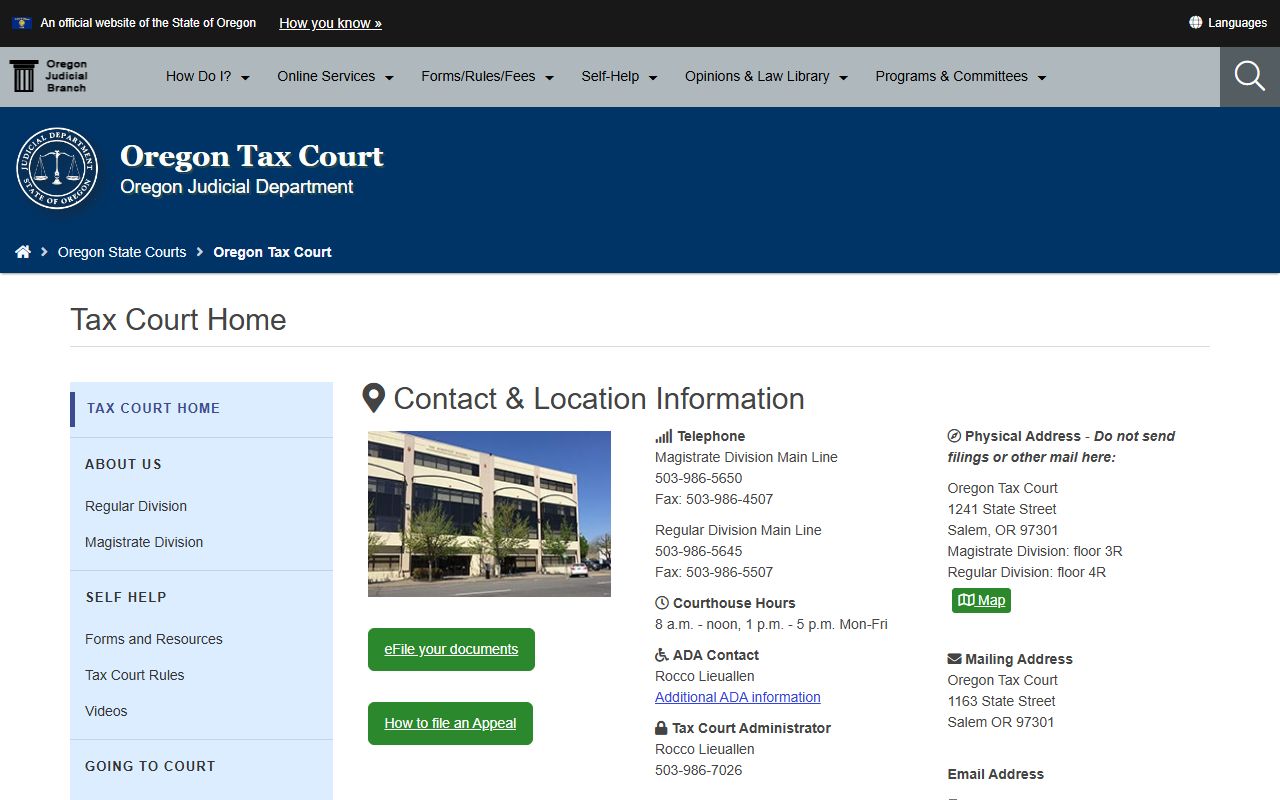
Beyond the county level, the Oregon Tax Court has exclusive jurisdiction over all property tax appeals in the state. The court has two divisions. The Magistrate Division handles most valuation cases and provides a less formal setting for taxpayers. The Regular Division deals with complex matters and requires more formal court proceedings. You have 30 days after a board decision to file with the Tax Court, and the Magistrate Division filing fee is $281. Appeals must be based on the value of the property as of January 1 of the assessment year. You need competent evidence to support a different value than what appears in your Oregon property tax records.
Simply believing that your Oregon property taxes are too high is not enough grounds for an appeal. The court can review Real Market Value, Maximum Assessed Value, and Assessed Value depending on your case. Decisions from the Regular Division may be appealed to the Oregon Supreme Court for further review.
Historical Oregon Property Tax Records
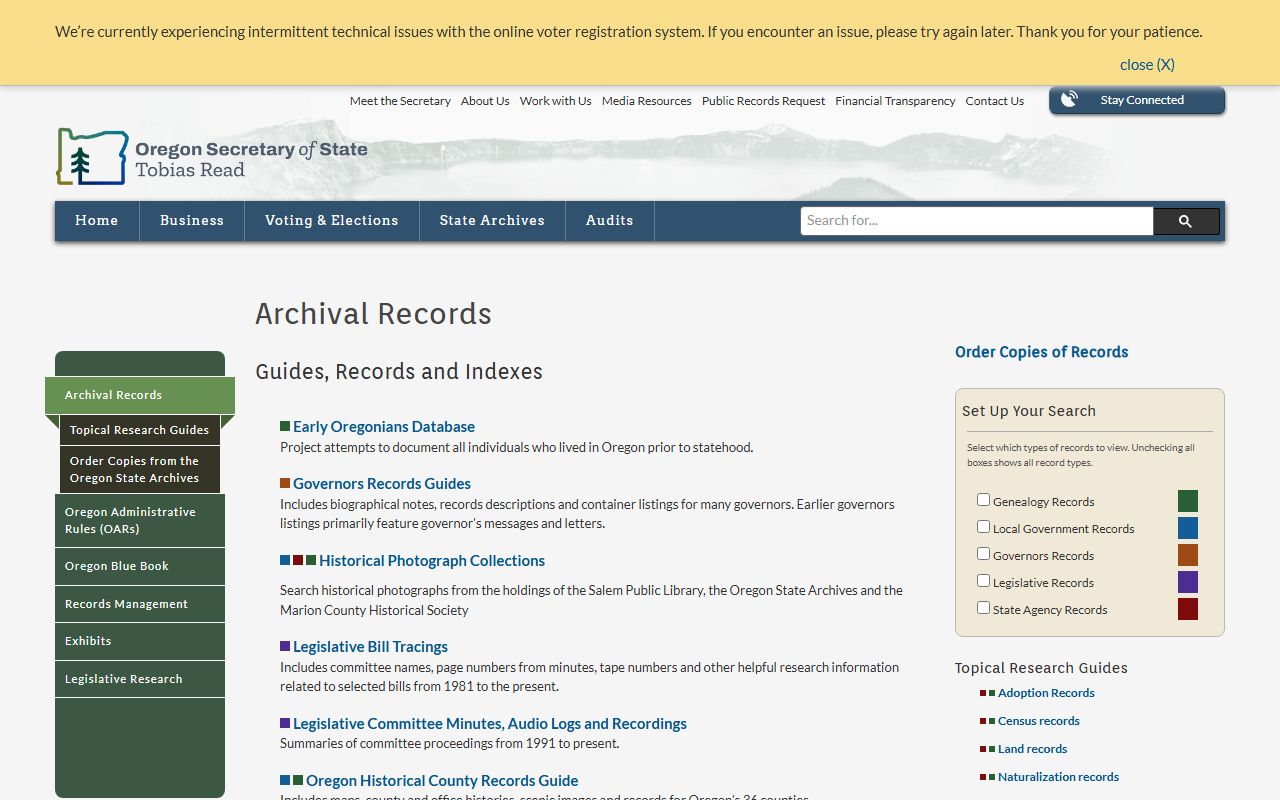
The Oregon State Archives holds property tax records dating back to the territorial period before Oregon became a state. These include old tax rolls, assessment lists, and property ownership documents that are valuable for genealogical research and historical study. The archives serve as the permanent repository for records transferred from county offices when they are no longer needed for daily work. The Oregon Historical County Records Guide covers all 36 counties with maps, histories, and detailed record inventories. The Early Oregonians Database tracks individuals who lived in the territory before statehood and includes property ownership data where available.
County assessors also store current Oregon property tax records at their local offices. These records are open to the public during regular business hours. You can review assessment data, tax rolls, and ownership records in person at any county assessor office in Oregon. Many offices provide public access terminals for searching electronic records. Recorded property documents from 1965 to the present are typically available in digital format across Oregon counties. Staff can help you locate specific records and navigate the search tools.
Note: Historical property tax records in Oregon may use different terminology and assessment methods than current records.
Oregon Property Tax Records by County
Each of Oregon's 36 counties has its own assessor who maintains property tax records for that area. Select a county below to find local resources, contact information, and details about searching property tax records in that county.
Property Tax Records in Oregon Cities
Cities in Oregon do not maintain their own property tax records. The county assessor handles all property assessment and tax collection. Pick a city below to learn about property tax records and local resources in that area.