
Albany Property Tax Records
Albany property tax records come from two different county offices. Albany straddles the border of Linn County and Benton County, which makes it unique among Oregon cities. The city does not maintain its own property tax records. Instead, each county assessor handles records for the portion of Albany that falls within its boundaries. Property owners must check with the correct county based on where their parcel sits.
Two Counties Manage Albany Tax Records
Albany is the county seat of Linn County. But the city also extends into Benton County on its western side. This split means that Albany property tax records are not all in one place. Linn County Assessment and Taxation handles records for parcels on the Linn County side. The Benton County Assessor's Office handles parcels on the Benton County side.
Each county maintains its own assessment rolls, tax statements, and ownership records. A property on one side of the county line may have a different assessor, different tax code area, and different set of taxing districts than a property just across the line. Both counties follow the same Oregon property tax laws, but local rates and special levies can vary.
If you own property in Albany and are not sure which county it falls in, check your tax statement. The county name appears on the bill. You can also look up your address on either county's online property search. Only one county will have a record for your parcel.
Note: The county line runs through Albany, so neighbors on the same street may deal with different county assessors.
Searching Albany Property Tax Records
To find your Albany property tax records, start with the county where your property is located. Linn County and Benton County both offer online search tools. You can search by address, owner name, or account number on either system.
Linn County's online property search shows assessed values, tax amounts, payment status, and property details. The system covers all Albany parcels on the Linn County side. Records include lot size, building information, and sales history. Benton County provides similar tools for Albany properties within its borders. The Benton County system shows assessments, tax breakdowns, and ownership records.
Both counties provide in-person access as well. Linn County's assessor office serves Albany and other communities like Lebanon, Sweet Home, and Brownsville. The Benton County office also serves Corvallis and Philomath. Staff at either office can help Albany property owners find their records and explain their tax bills.
Albany Property Assessments and Values
The screenshot below is from the ORS 308.156 page, which explains the maximum assessed value rules that apply to Albany properties in both counties.
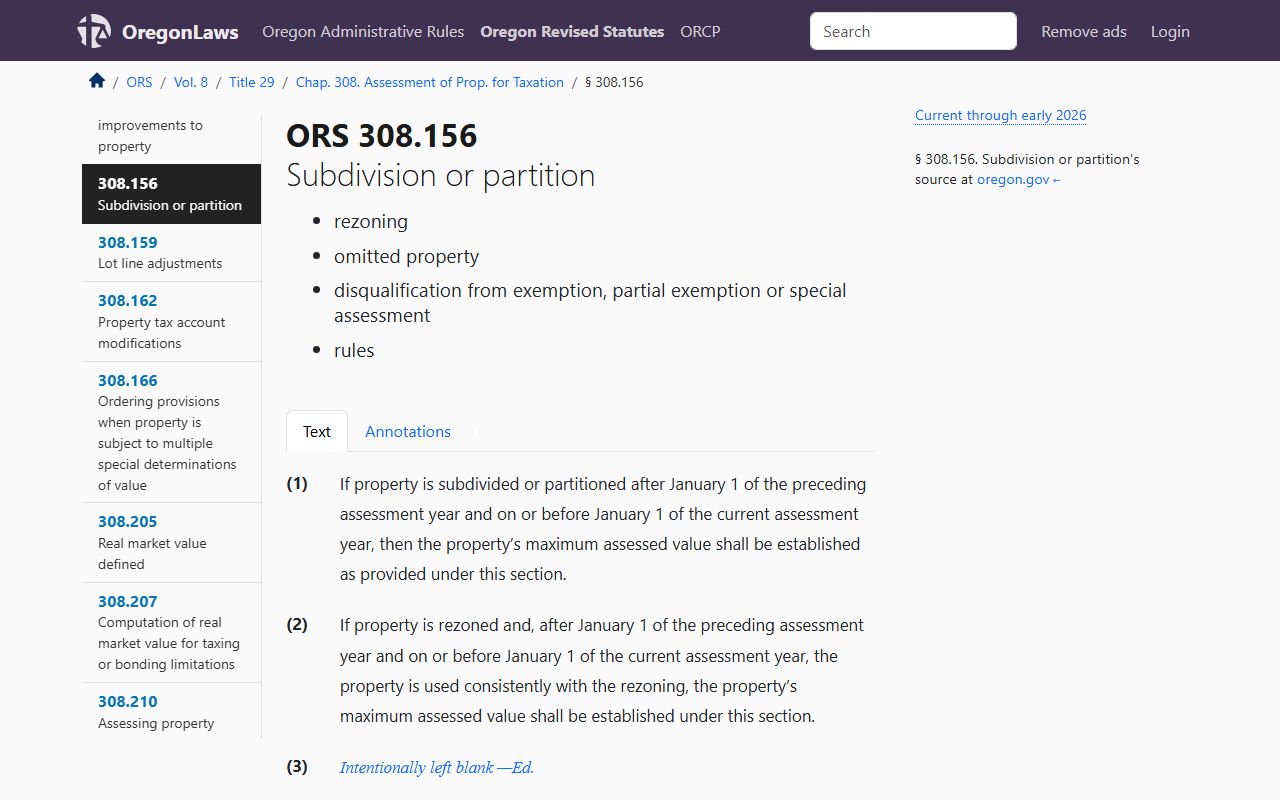
Both Linn County and Benton County follow the same state rules when assessing Albany property. Each county sets a real market value and a maximum assessed value for every parcel. The real market value is what the property would sell for. The maximum assessed value is capped at 3% growth per year under ORS 308.156. Your tax bill is based on the lower of the two.
Even though the laws are the same, the two counties may have different changed property ratios. This ratio affects how new construction is valued. A new home on the Linn County side of Albany may start with a slightly different assessed value than a similar new home on the Benton County side. Both values will be fair under the law, but they reflect each county's unique sales data.
Albany's location in two counties also means that tax code areas differ across the city. Properties on the Linn County side may pay taxes to different school districts or special districts than properties on the Benton County side. This can lead to different total tax rates for Albany homeowners depending on their exact location.
Property Tax Exemptions in Albany
Both Linn County and Benton County offer exemption programs that can lower taxes for qualifying Albany property owners. These programs follow the same state laws but are administered by each county separately.
Common exemption programs for Albany residents include:
- Senior citizen property tax deferrals
- Disabled veteran exemptions
- Farm and forestland special assessment programs
- Enterprise zone incentives for qualifying businesses
Under ORS 307.030, all real property is taxable unless a specific exemption applies. Albany property owners apply for exemptions through whichever county holds their parcel. Deadlines are set by state law. Check with your county assessor to find out which programs fit your situation.
Note: An exemption application filed with the wrong county will not be processed, so confirm which county your Albany property is in before applying.
Appealing Albany Property Tax Values
Albany property owners appeal through the county that assessed their property. The process is the same in both Linn and Benton counties, following state law. Start by contacting the assessor's office to discuss your concerns informally. Many issues can be resolved at this stage.
If informal review does not help, file a formal appeal with the county clerk. You must file after your tax statement arrives and before December 31. The Property Valuation Appeals Board in each county holds hearings between February and April. Bring comparable sales, an appraisal, or other evidence showing the value of your Albany property as of January 1.
Board decisions can be appealed to the Oregon Tax Court within 30 days. The Magistrate Division handles most property value cases. The filing fee is $281. The court reviews evidence from both sides and issues a written decision.
How Albany Property Tax Revenue Works
The image below comes from the Oregon Department of Revenue property tax page, which explains how tax revenue flows from counties to cities like Albany.
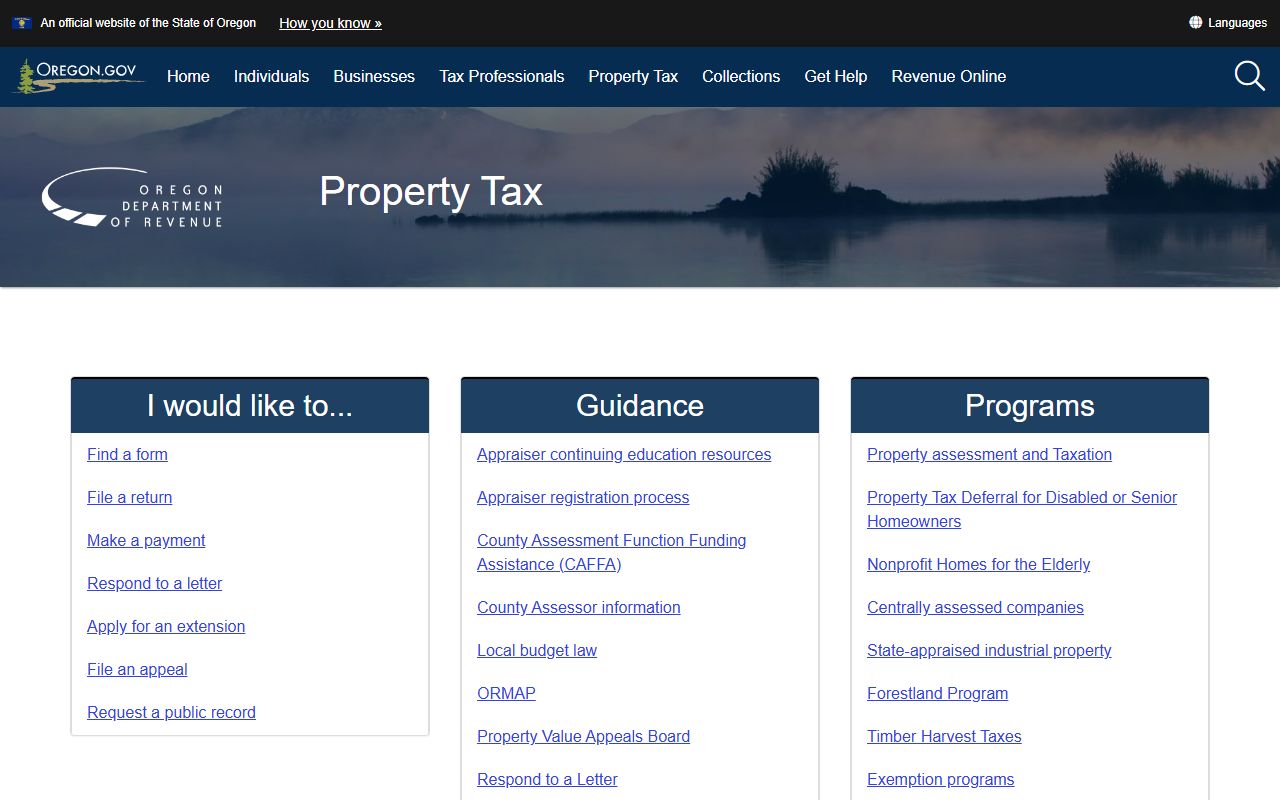
Albany receives property tax revenue from both Linn County and Benton County. Each county collects taxes from Albany parcels within its borders and distributes the city's share. The city uses these combined funds for police, fire, library, and other services that cover all of Albany regardless of county lines.
Tax statements show a breakdown by taxing district. Albany residents can see exactly how much of their bill goes to the city, their school district, the county, and any special districts. The mix of districts may differ depending on which side of the county line you live on, even within the same city.
Oregon Law and Albany Property Tax Records
ORS Chapter 306 governs property taxation across Oregon. It sets standards for how assessors value property, how records are maintained, and how taxpayers can challenge their assessments. Both Linn and Benton counties follow these rules when handling Albany property tax records.
The Oregon Department of Revenue oversees both counties. Annual ratio studies check that assessments are fair and uniform. If either county's assessments for Albany properties fall out of line, the state can require corrections. This layer of oversight helps ensure that Albany property owners on both sides of the county line are treated fairly.
Historical Albany property records may be available through the Oregon State Archives. Older tax rolls and assessment lists from both counties are stored there for long-term preservation. These records can be useful for genealogical and historical research about Albany's past.
Linn and Benton County Property Tax Records
Albany spans two counties. Most of the city falls within Linn County, where Albany serves as the county seat. The western portion lies in Benton County. For full details on each county's assessment process, payment options, and recording services, visit the county property tax records pages below.