
Linn County Assessment Records
Linn County property tax records serve the communities of Albany, Lebanon, Sweet Home, Brownsville, and Harrisburg. The county's Assessment and Taxation department tracks ownership, assessed values, and tax payment history for residential, commercial, industrial, and rural parcels. Searching these records gives you access to the data behind your tax bill and helps with property research. Linn County offers online search tools and in-person access at the assessor's office. Whether you own a home in Albany or farmland near Harrisburg, the county maintains detailed records on your property.
Linn County Property Tax Overview
The Linn County Assessor's Office is responsible for appraising and assessing all taxable property in the county. Staff maintain records that include ownership information, assessment values, property characteristics, and sales data. The office also administers exemption and special assessment programs for qualifying properties.
Linn County spans a mix of land types. The Willamette Valley floor holds most of the residential and commercial development in cities like Albany and Lebanon. To the east, the foothills and Cascade Range bring timber, rural residential, and recreational properties into the tax roll. Farm and forestland deferrals play a big role in the county's assessment work, lowering the taxable value of working lands under state programs.
Property tax payments go through the Tax Collector's Office. The county accepts online payments, mail-in payments, and in-person payments. Oregon law sets November as the primary due date, with installment options running through the following May.
Searching Linn County Property Tax Records
Linn County provides online property search tools on the assessor's website. Users can look up accounts by owner name, address, or account number. The system displays ownership information, assessed values, real market values, maximum assessed values, and detailed tax calculations.
Property characteristics are also available. You can view lot size, building details, improvement data, and sales history showing past transfers. This makes the online system useful for a range of tasks, from checking your own tax bill to researching a property you plan to buy. The search tool runs around the clock for public use.
Taxpayers can make online payments and sign up for electronic tax statement delivery through the county website. Electronic statements contain the same information as paper bills and help you stay on top of deadlines.
The Oregon Department of Revenue oversees property tax rules across all 36 counties.
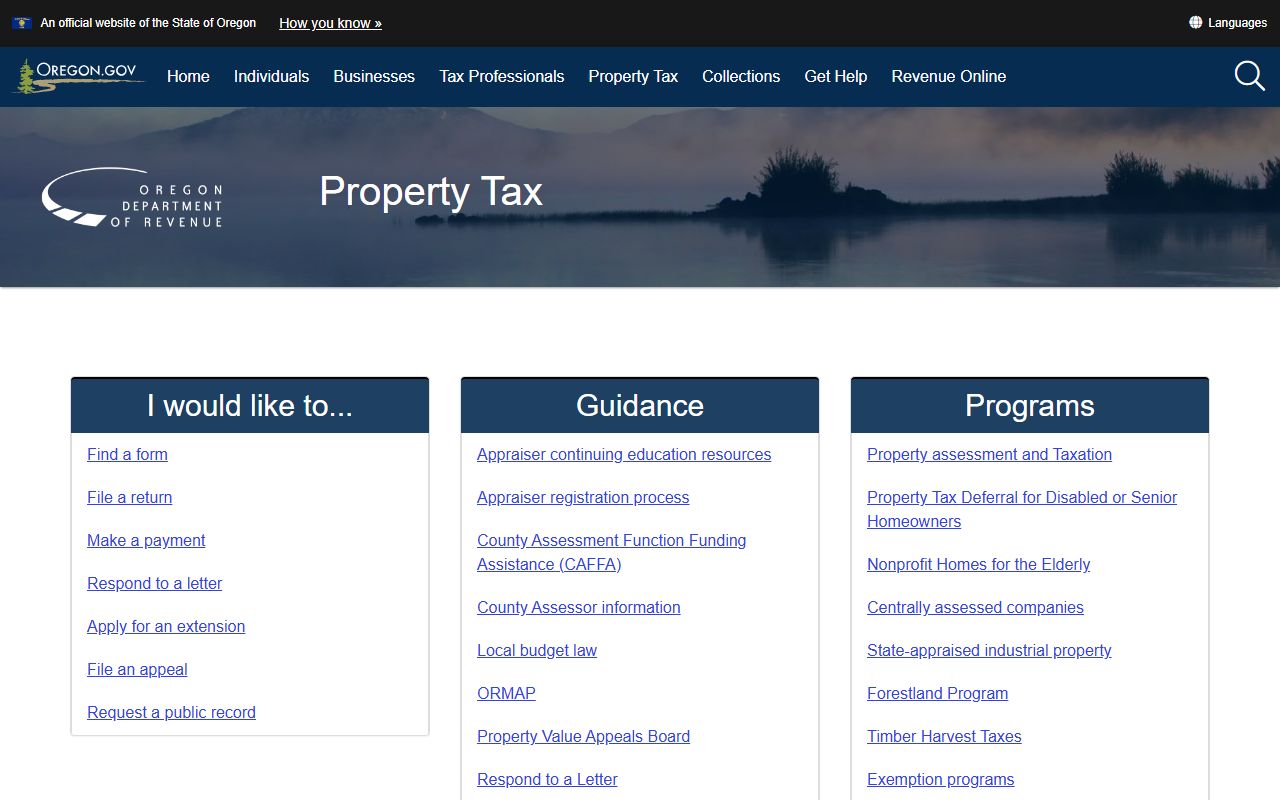
This state resource explains how assessments work under Measure 5 and Measure 50. It covers tax rate caps, value limits, and the programs that Oregon counties administer on behalf of the state.
Linn County Property Tax Exemptions
Several state programs can reduce your property tax burden in Linn County. The assessor's office handles applications and can explain what each program requires. Common exemptions include:
- Senior citizen deferrals for homeowners meeting age and income thresholds
- Disabled veteran exemptions based on VA disability percentage
- Farm deferrals for qualifying agricultural land
- Forestland special assessments for timber properties
- Historic property programs for designated buildings
Each program has filing deadlines. Missing a deadline usually means waiting another full year to apply. Under ORS 307.030, all real property is subject to assessment and taxation unless a specific statutory exemption applies. Approved exemptions reduce the taxable value shown on your annual tax statement.
How Linn County Property Taxes Are Calculated
Your tax bill depends on two things: your assessed value and the combined tax rate for your location. Oregon uses three values in the process. Real market value is what the property would sell for. Maximum assessed value starts from a 1990s base and grows by no more than three percent each year under ORS 308.156. Assessed value is the lower of the two, and that is what gets taxed.
Tax rates come from the districts that serve your property. Schools, the city, the county, fire districts, and other special districts each levy a share. Measure 5 caps total rates at $5 per $1,000 for schools and $10 per $1,000 for general government. When rates exceed these caps, compression reduces each district's collection proportionally. This system means your final bill reflects both your property's value and the combined needs of local governments.
Note: The changed property ratio determines how new construction is valued relative to existing properties in Linn County.
Linn County GIS and Property Maps
The county maintains a Geographic Information System for property mapping. Digital tax lot maps show property boundaries, lot numbers, and ownership data. Interactive online maps let you search by address or browse the map directly.
Map layers include property lines, aerial photos, and zoning designations. This data serves assessment work, land use planning, and emergency response across the county. Linn County participates in the Oregon Map (ORMAP) project, feeding its parcel data into the statewide digital mapping system. ORMAP data is free to access through the state's online viewer and is updated regularly as changes are recorded.
ORS Chapter 306 establishes the legal framework for property taxation in Oregon.
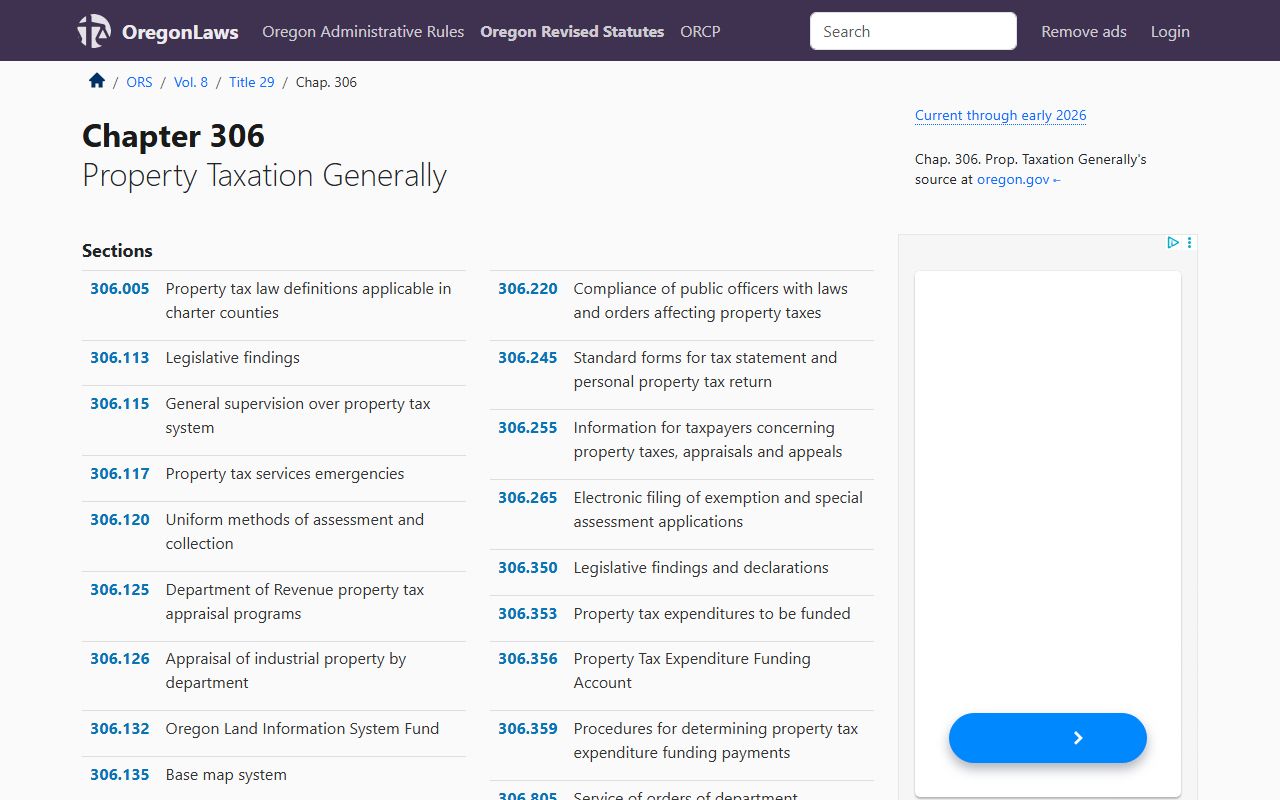
These statutes define key terms, set out the duties of county assessors, and create the rules for assessment and collection. They apply to every property in Linn County and every other Oregon county.
Linn County Property Tax Appeals
Property owners who disagree with their assessed value can start by contacting the Linn County Assessor for an informal review. The office encourages this step because many concerns can be addressed quickly without a formal filing.
If the informal review does not resolve your issue, file an appeal with the Property Valuation Appeals Board. The filing period runs from late October, when tax statements are mailed, through December 31. Your appeal must include the property's current value, the value you believe is correct, and evidence to support your position. Comparable sales and appraisals carry the most weight.
The PVAB holds hearings between February and April. You may attend in person, submit written evidence, or send a representative. After the board issues its decision, either party can appeal to the Oregon Tax Court within 30 days. The court's Magistrate Division handles most property value disputes.
Property Tax Records and Public Access
Linn County property tax records are public information. Anyone can search the online database or visit the assessor's office to view records. This transparency helps buyers, sellers, lenders, and researchers access the data they need.
For records beyond what the county holds, the Oregon Department of Revenue handles public records requests for statewide tax data. The Oregon State Archives preserves historical tax rolls and assessment documents that may include older Linn County records dating back decades or more.
Note: Personal financial information in tax records may be protected from disclosure under Oregon's privacy statutes.
ORS 307.030 defines which property is subject to assessment and taxation in Oregon.
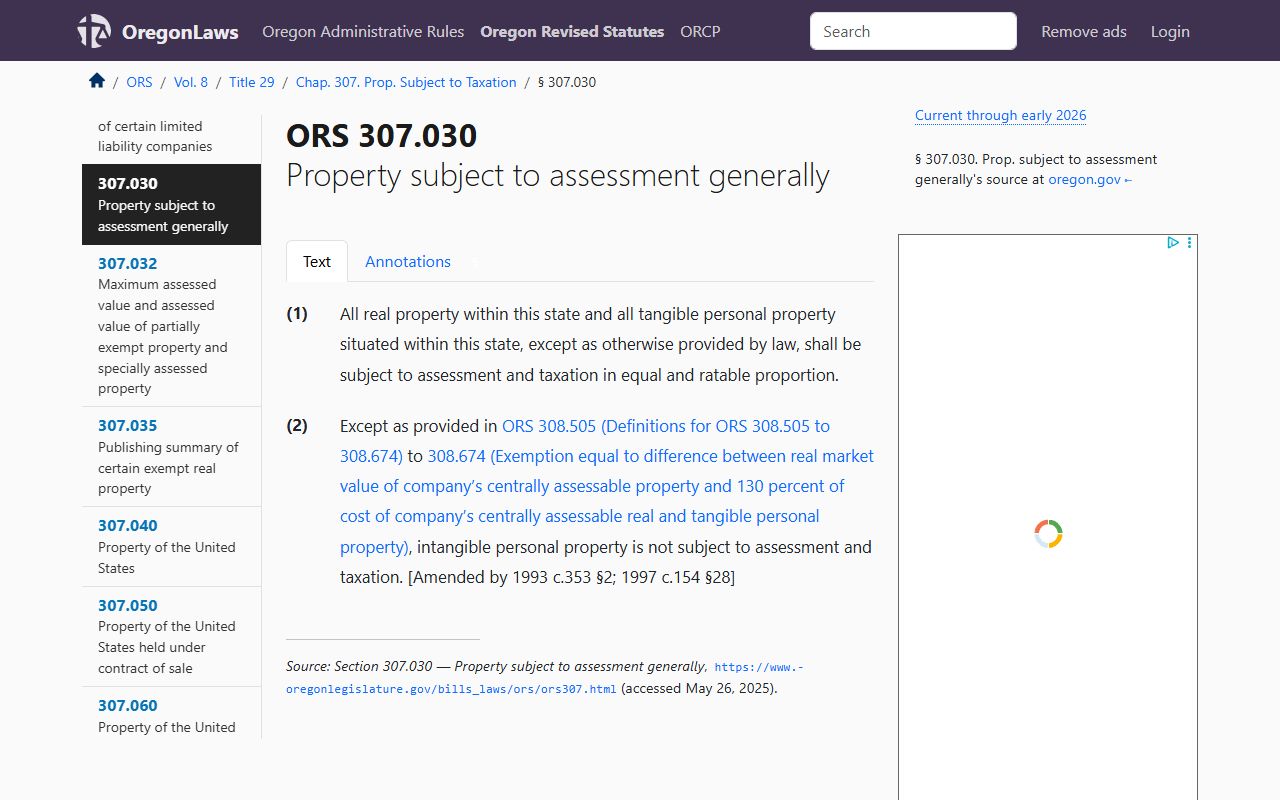
This statute requires that all real property be assessed in equal proportion, with exceptions only for categories specifically identified in state law. It is the foundation of Oregon's property tax system and applies to every parcel in Linn County.