
Salem Tax Record Search
Salem property tax records are maintained by the Marion County Assessor's Office. As Oregon's state capital and the Marion County seat, Salem holds a large share of the county's property accounts. Marion County handles all assessments, collections, and record keeping for Salem properties. Residents can search their property tax records online through the county system. Below you will find details on accessing records, understanding values, and filing appeals in Salem.
Marion County Handles Salem Property Tax Records
Salem does not operate its own property tax office. Marion County takes care of this for every city and town in the county. The assessor's office appraises all taxable parcels. The tax collector bills property owners and processes payments. Salem receives its share of revenue through the county distribution system, but the county runs the day-to-day operations.
Under ORS Chapter 306, the county assessor holds legal responsibility for all property assessments. This includes residential, commercial, industrial, farm, and forest properties within Salem city limits. The Marion County Assessor's Office sits in the county courthouse right in Salem, making it easy for residents to visit in person.
Marion County maintains records on over 130,000 property tax accounts across the entire county. A large portion of those accounts cover Salem properties. The office handles ownership records, assessment data, sales history, and exemption applications for each account.
Note: The Salem Finance Department manages the city budget but does not process property tax records.
Search Salem Property Tax Records
Marion County provides online tools for looking up property tax records. You can search by account number, owner name, or address. The system shows current and past assessment data, tax amounts, and payment status for Salem properties.
Property records include detailed breakdowns of assessed values, real market values, and maximum assessed values. You can see how much of your tax bill goes to each district, including the City of Salem, schools, and special districts. Property details like lot size, square footage, year built, and construction type are also listed. Many records include photographs for property identification.
Salem residents can sign up for electronic delivery of tax statements through the online system. This ensures timely receipt of bills and cuts down on paper mail. Electronic statements contain the same information as the printed version.
The Oregon Department of Revenue oversees property tax administration statewide. The screenshot below shows state-level resources available to Salem property owners.
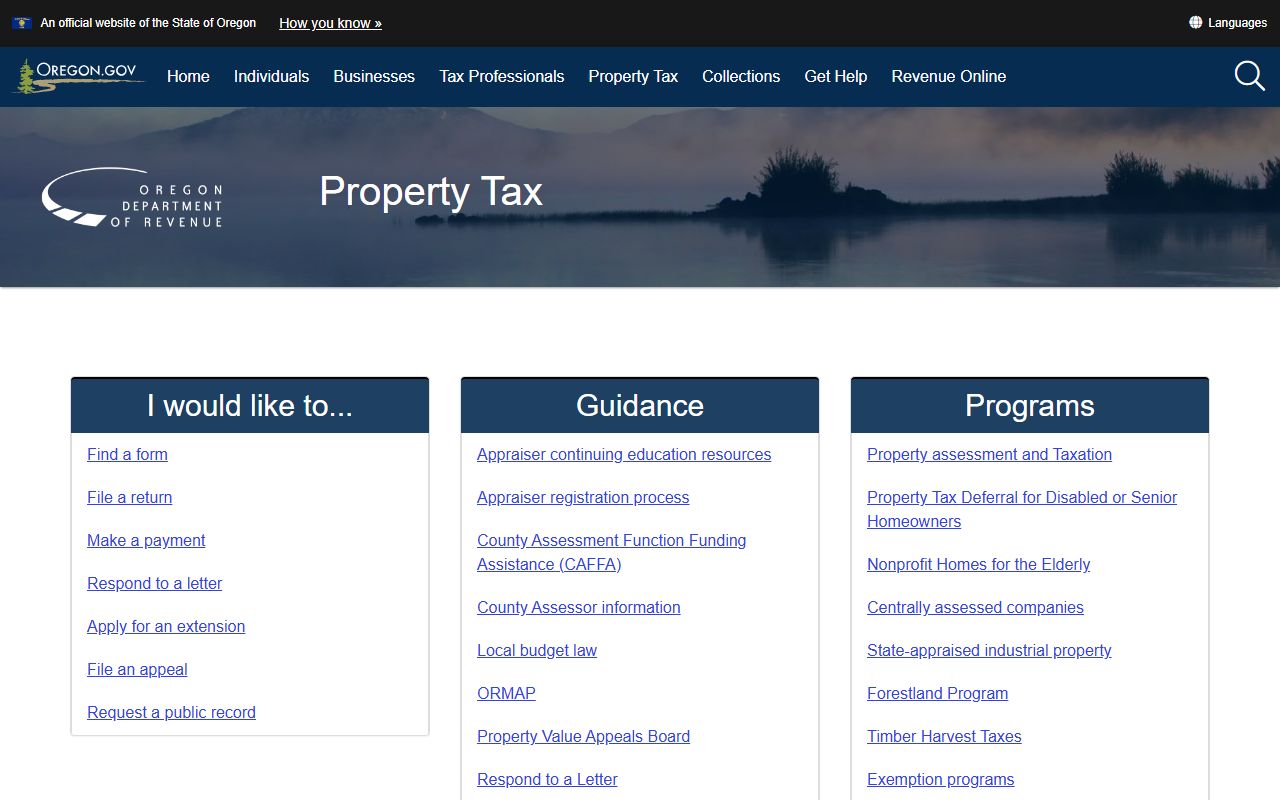
State guidance helps Salem residents understand how their property taxes are calculated under Oregon law.
Salem Property Tax Values
Each Salem property carries three values. Real Market Value (RMV) is what the property could sell for as of January 1. Maximum Assessed Value (MAV) was set by Measure 50 and grows at most 3% each year under ORS 308.156. Assessed Value (AV) equals the lower of RMV or MAV. Your tax bill is based on the AV.
In Salem, many properties have an MAV far below their current market value. This is because the MAV started at 90% of the 1995-96 assessed value and has only grown 3% per year since then. Meanwhile, real estate prices in Salem have climbed much faster. The result is a built-in tax break for long-held properties, while newer homes get valued using the changed property ratio to stay in line with existing ones.
Measure 5 rate limits also apply. School levies cap at $5 per $1,000 of RMV. General government caps at $10 per $1,000. When levies exceed these caps, compression reduces the total. Some Salem tax code areas experience compression each year, which lowers the effective rate below what districts originally levied.
Pay Salem Property Taxes
Marion County mails tax statements to Salem property owners in late October. Full payment by November 15 earns a discount. Two-payment and three-payment plans are also available with later due dates in February and May.
All payments go to the Marion County Tax Collector. Options include online payment, mail, in-person payment at the courthouse, and drop boxes. The county accepts credit cards, debit cards, checks, and cash for walk-in payments. Late payments carry interest, so meeting the deadlines matters.
Appeal Salem Property Tax Assessments
Salem residents who think their property assessment is wrong can appeal to the Marion County Property Valuation Appeals Board (PVAB). The filing window runs from late October through December 31 each year.
Marion County recommends starting with an informal discussion with the assessor's office. Staff can walk you through how your Salem property was valued. They can fix data errors and explain the assessment process. This informal step resolves many concerns without a formal filing.
Formal appeals go to the county clerk on forms available from the county. You specify which value is in question, state what you believe the correct value is, and attach evidence. Strong evidence for Salem appeals includes comparable sales, independent appraisals, or documentation of conditions affecting value.
The PVAB holds hearings from February to April. You can attend, send written testimony, or have a representative appear for you. Hearings are informal and designed for people without attorneys. The board issues a written decision after each hearing.
If unsatisfied, you can appeal to the Oregon Tax Court within 30 days. The Magistrate Division filing fee is $281. The court needs evidence of value as of January 1 of the assessment year.
Note: A reduction in Real Market Value does not always lower your taxes if the RMV is still above the Maximum Assessed Value.
Salem Property Tax Exemptions
Marion County administers exemption and deferral programs for eligible Salem homeowners. These programs follow state law and reduce the tax burden for qualifying individuals.
Senior citizens and people with disabilities may defer property tax payments until the home changes hands. Disabled veterans can receive an exemption on their primary home. Active military members on overseas deployment may also qualify for tax relief. Farm and forestland near Salem can receive special assessment rates under separate statutes. Under ORS 307.030, all property is taxable unless a specific exemption exists in law.
Applications for all exemption programs go through the Marion County Assessor's Office at the courthouse in Salem. Each program has its own deadlines and eligibility standards. Contact the office for current forms and instructions.
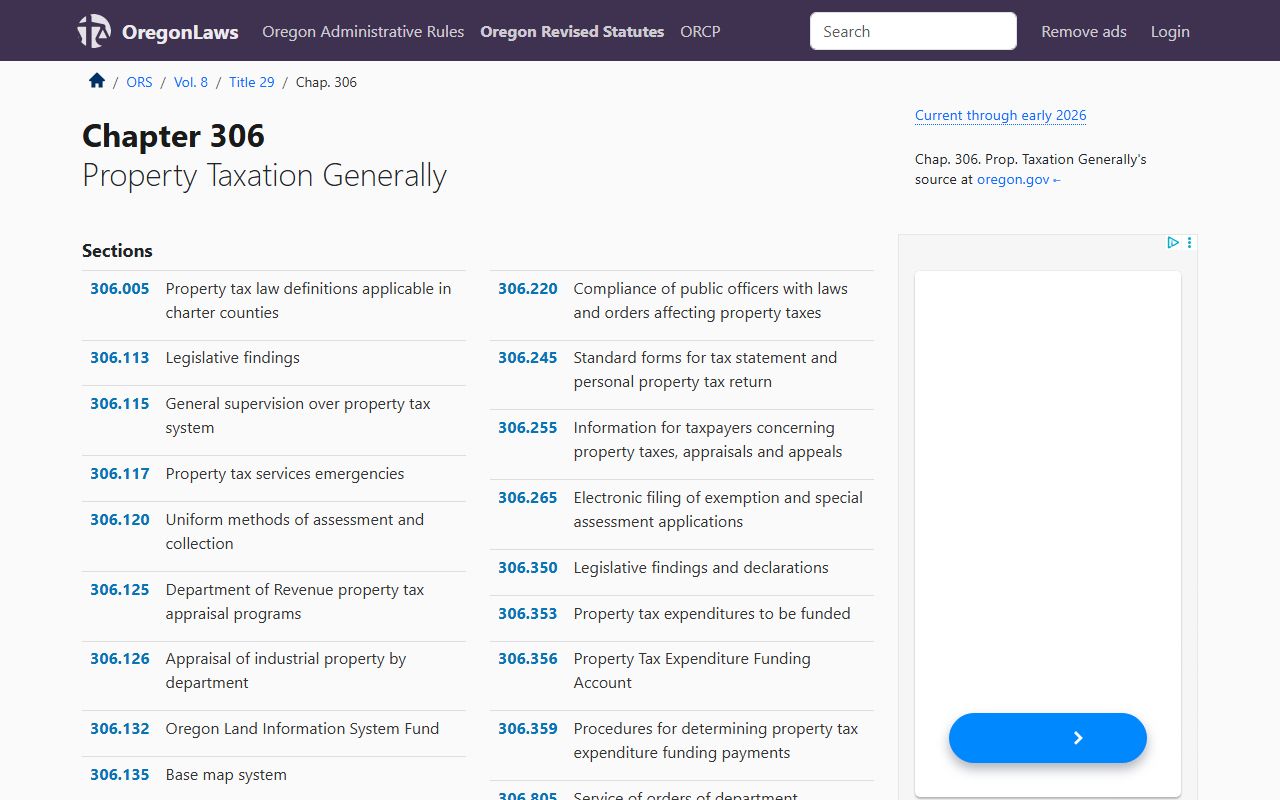
ORS Chapter 306 at oregon.public.law outlines the state framework for property tax administration that governs Salem assessments.
Recorded Documents for Salem Properties
The Marion County Recording Division records deeds, mortgages, liens, and other instruments affecting Salem real property. The office is in the county courthouse. Documents must meet format and notarization standards set by state law.
E-recording is available through approved vendors for high-volume submitters like title companies and lenders. Public access terminals let anyone search recorded documents. Certified copies are available for a fee. Recording fees follow state statutes and county ordinances.
Historical Salem property records not held by the county may be available through the Oregon State Archives, which preserves tax rolls, assessment lists, and ownership documents dating back to Oregon's territorial period.
Marion County Property Tax Records
Salem is the county seat of Marion County, and the county manages all property tax records for the city. For full details on county services, office hours, contact information, and the complete appeals process, visit the Marion County property tax records page.