
Marion County Property Tax Search
Marion County property tax records cover more than 130,000 accounts across Salem, Keizer, Woodburn, Silverton, and the surrounding Willamette Valley. The county assessor's office, located in the Marion County Courthouse in Salem, maintains detailed records on residential, commercial, industrial, farm, and forest properties. Searching these records gives you access to assessed values, ownership history, tax payments, and property characteristics. Whether you need to verify your own tax bill or research a property before a purchase, Marion County provides online tools and in-person services to help you find what you need.
Marion County Assessor's Office
The Marion County Assessor appraises and assesses all taxable property in the county. With over 130,000 property tax accounts on file, this is one of the larger assessment operations in Oregon. The office sits in the Marion County Courthouse in downtown Salem, making it accessible for taxpayers who want to visit in person.
Staff maintain records that include ownership data, assessment values, property characteristics, and sales history for every parcel. The assessor also runs exemption and special assessment programs. These include senior citizen deferrals, disabled veteran exemptions, active military exemptions, farm deferrals, forestland deferrals, and historic property special assessments. Each program has eligibility rules and filing deadlines under state law.
The assessor's office fields questions by phone, email, and walk-in visits. If you have a concern about your assessed value, start by contacting the office to talk it through. Many issues are resolved at this stage without any formal filing.
Searching Marion County Property Tax Records
Marion County offers online property search tools that let you look up any parcel by account number, owner name, or address. The system displays current and historical assessment data, real market values, maximum assessed values, and tax calculations. You can see how your taxes are split among schools, cities, and special districts.
Property characteristics are listed for each account. Lot size, building square footage, year built, construction type, and improvement details are all part of the record. Many properties include photographs that help with identification. Sales history shows past transfers with dates, prices, and document types. This data is useful for buyers, appraisers, and anyone preparing a valuation appeal.
The system also supports electronic tax statement delivery. Sign up through the county website to get your bill by email instead of paper mail. You can make payments online too, which saves a trip to the courthouse.
Note: Online records are updated regularly but may lag behind the most recent changes by a few days.
The Oregon Department of Revenue provides property tax guidance for all counties.
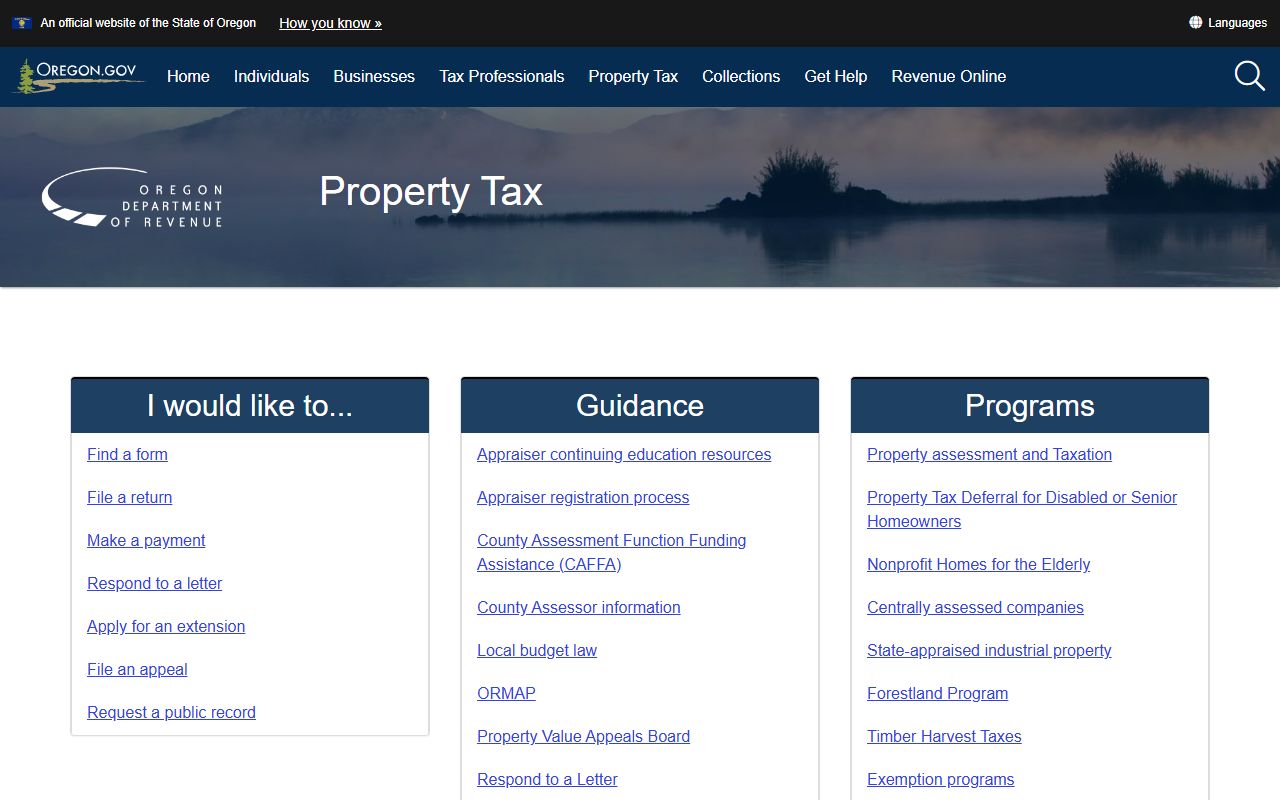
This state portal explains how Oregon's assessment system works, including the Measure 5 rate limits and Measure 50 value caps. Marion County taxpayers can find forms, payment information, and answers to common questions through this resource.
Marion County Property Tax Payments
Property tax payments are processed through the Marion County Tax Collector. You can pay online, by mail, in person at the courthouse, or through drop boxes. The county accepts credit cards, debit cards, checks, and cash for in-person payments.
Oregon's payment schedule starts in November. Paying the full amount by mid-November earns a discount of roughly three percent. A two-thirds payment by the same date gets a smaller discount. Installment payments split the bill into three parts due in November, February, and May. Late payments generate interest and penalty charges under state law.
If property taxes remain unpaid for three years, the county may begin foreclosure proceedings. Staying current on your payments protects your ownership rights and avoids the added cost of penalties and interest. Contact the Tax Collector if you have questions about your balance or payment options.
How Marion County Tax Bills Are Calculated
Oregon uses three values to figure your property tax. Real market value is the price the property would bring in an open sale. Maximum assessed value is capped and can rise by no more than three percent a year under ORS 308.156. Your assessed value is the lower of these two numbers, and that is what gets taxed.
The tax rate depends on your location within Marion County. Each tax code area has its own combination of levies from the county, city, school district, and special districts. Measure 5 caps school rates at $5 per $1,000 of real market value and general government rates at $10 per $1,000. When the combined rate exceeds these limits, compression reduces each district's collection. The Department of Revenue monitors these calculations statewide to ensure consistency.
Note: New construction and major improvements are valued using the changed property ratio, which keeps new properties in line with existing ones.
Marion County Property Tax Appeals
The appeals process starts with the assessor's office encouraging informal discussion. Call or visit to talk about your assessment before filing anything formal. Staff can explain how the value was set and may spot errors that can be fixed right away.
If informal review does not resolve the issue, file a formal appeal with the Property Valuation Appeals Board. The filing window opens when tax statements are mailed in late October and closes December 31. Your appeal must identify the property, state the current value, and specify the value you believe is correct. Supporting evidence is required.
The PVAB holds hearings between February and April. You can appear in person, submit written testimony, or have an agent represent you. Hearings are informal and designed for taxpayers who represent themselves. The board issues written decisions after considering evidence from both sides.
If you disagree with the board's decision, you may appeal to the Oregon Tax Court within 30 days. The Magistrate Division handles most property value appeals. The filing fee is $281. Under ORS Chapter 306, the state ensures that assessment standards are met across all counties.
ORS 307.030 defines the scope of property subject to assessment in Oregon.
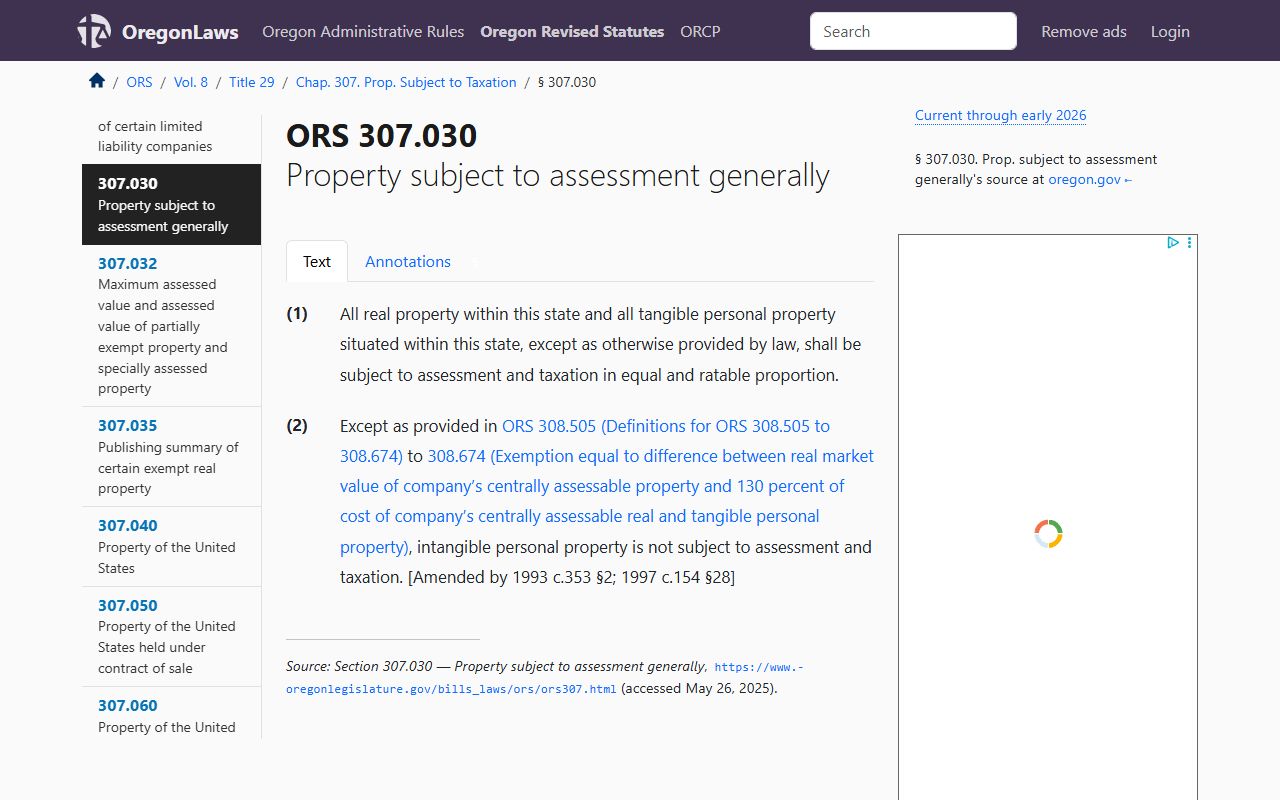
This statute requires all real and tangible personal property to be assessed in equal proportion, with exceptions for government-owned property, religious organizations, and other categories identified in state law. It applies to every one of Marion County's 130,000-plus accounts.
Recording Division and Property Documents
The Marion County Recording Division records deeds, mortgages, liens, and easements at the courthouse in Salem. Recording creates a public record of ownership changes and financial claims against real property. Documents must meet Oregon standards for format, legibility, legal descriptions, and notarization.
Marion County participates in e-recording through approved vendors. This allows title companies, attorneys, and lenders to submit documents electronically. Recorded documents are indexed and available for public search. Access terminals at the courthouse let you look up records in person. The Recording Division also provides certified copies upon request.
Recording fees are set by state statute and county ordinance. Fee schedules are posted on the county website. Extra charges apply for multi-page documents, multiple assignments, and certified copies.
Marion County Property Tax Exemptions
Several exemption programs can reduce your property tax in Marion County. The assessor's office handles all applications. Available programs include:
- Senior citizen deferrals for homeowners meeting age and income requirements
- Disabled veteran exemptions based on VA disability rating
- Active military exemptions for deployed service members
- Farm and forestland special assessments for working properties
- Historic property programs for designated buildings
- Enterprise zone exemptions in eligible areas
Each program has its own deadlines and documentation requirements. The assessor's office can provide forms and explain what you need to qualify. Most exemptions require periodic renewal or verification. Under ORS 307.030, all property is taxable unless a specific statutory exemption has been granted.
Historical Property Tax Records
Marion County's property records stretch back many decades. For older records no longer held at the county level, the Oregon State Archives in Salem is the best resource. The archives preserve historical tax rolls, assessment lists, and ownership documents from across the state.
Researchers can access these materials at the archives reference room or through digital collections when available. The Early Oregonians Database at the archives documents individuals who lived in Oregon before statehood and may include property ownership information. For statewide tax data and statistical reports, the Oregon Department of Revenue's public records process handles formal requests.
ORS Chapter 306 governs property tax administration across Oregon.
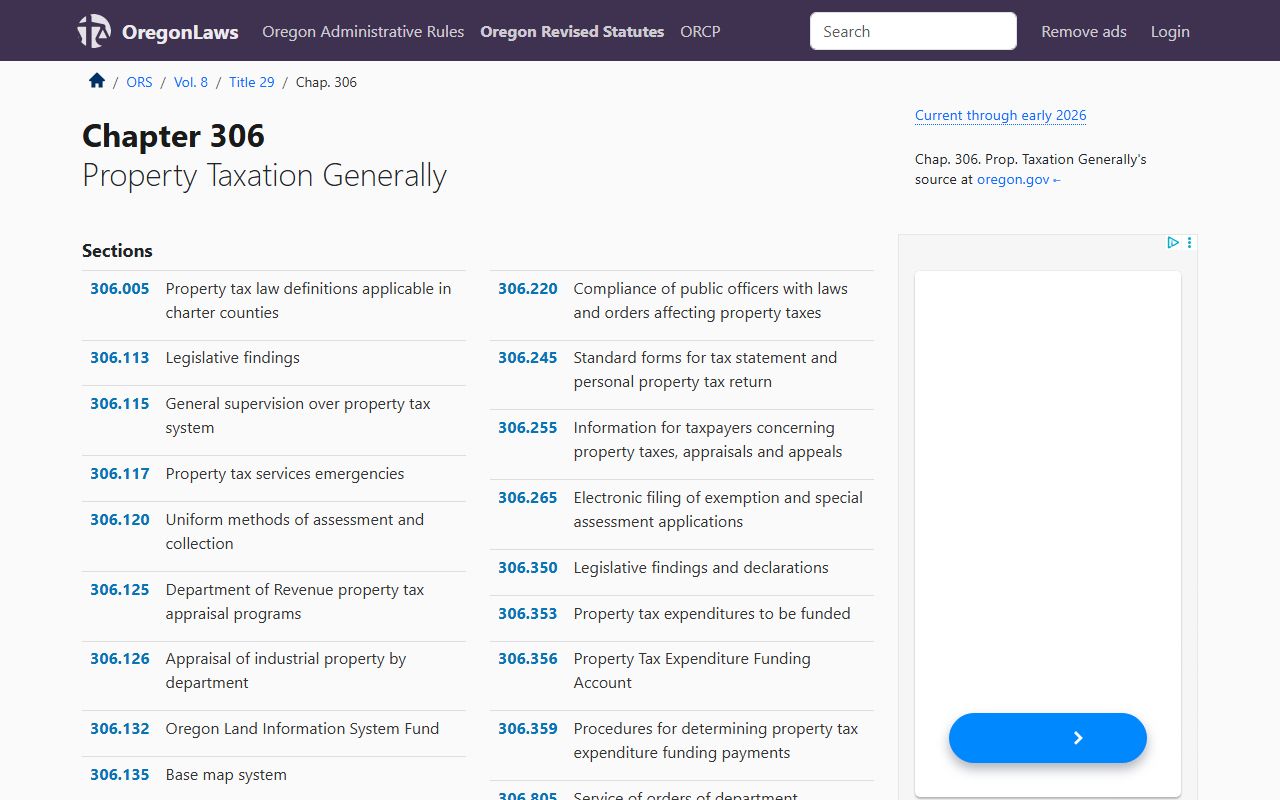
These statutes cover the duties of the Department of Revenue, county assessors, and tax collectors. They define how assessments are made, how appeals work, and how the state oversees the entire system. Every property in Marion County falls under this legal framework.