
Coos County Property Tax Data
Coos County property tax records cover the southern Oregon coast from Coos Bay and North Bend down to Bandon and inland to Coquille and Myrtle Point. The Coos County Assessment and Taxation department maintains files on coastal homes, timberland, agricultural parcels, and town lots throughout the county. Residents and prospective buyers can search these property tax records to find assessed values, tax bills, and ownership history. The county seat of Coquille is where the assessment office is based, though the largest population centers are Coos Bay and North Bend.
Coos County Assessment and Taxation
The Coos County Assessment and Taxation department appraises all taxable property in the county. Staff handle a wide range of property types. Coastal parcels in Coos Bay and Bandon sit alongside vast tracts of timberland and farm ground. Each type requires different appraisal methods and data sources.
Timberland is a major part of the Coos County tax base. Special assessments apply to timber and agricultural properties under Oregon law, which can lower their taxable values compared to full market rates. The assessor must track which parcels qualify and apply the correct programs each year. Rural properties across the county also include working ranches and small farms that benefit from use-value assessment rather than market-based valuation.
The department also collects property taxes. Bills go out each fall, and staff process payments made online, by mail, and in person. The office maintains complete Coos County property tax records with ownership data, values, and payment history for every account.
How to Find Coos County Property Tax Records
Coos County provides online search tools for property tax records. Taxpayers can look up accounts and see assessed values, tax amounts, and basic property details. The system accepts searches by owner name, address, and tax lot number. Sales history is available for parcels that have changed hands.
For broader guidance, the Oregon Department of Revenue publishes tools and forms that apply to every county. The state site explains how assessed values are set, how tax rates work, and what rights taxpayers have.
The screenshot below shows the Oregon DOR property tax page, a key resource for understanding Coos County property tax records.
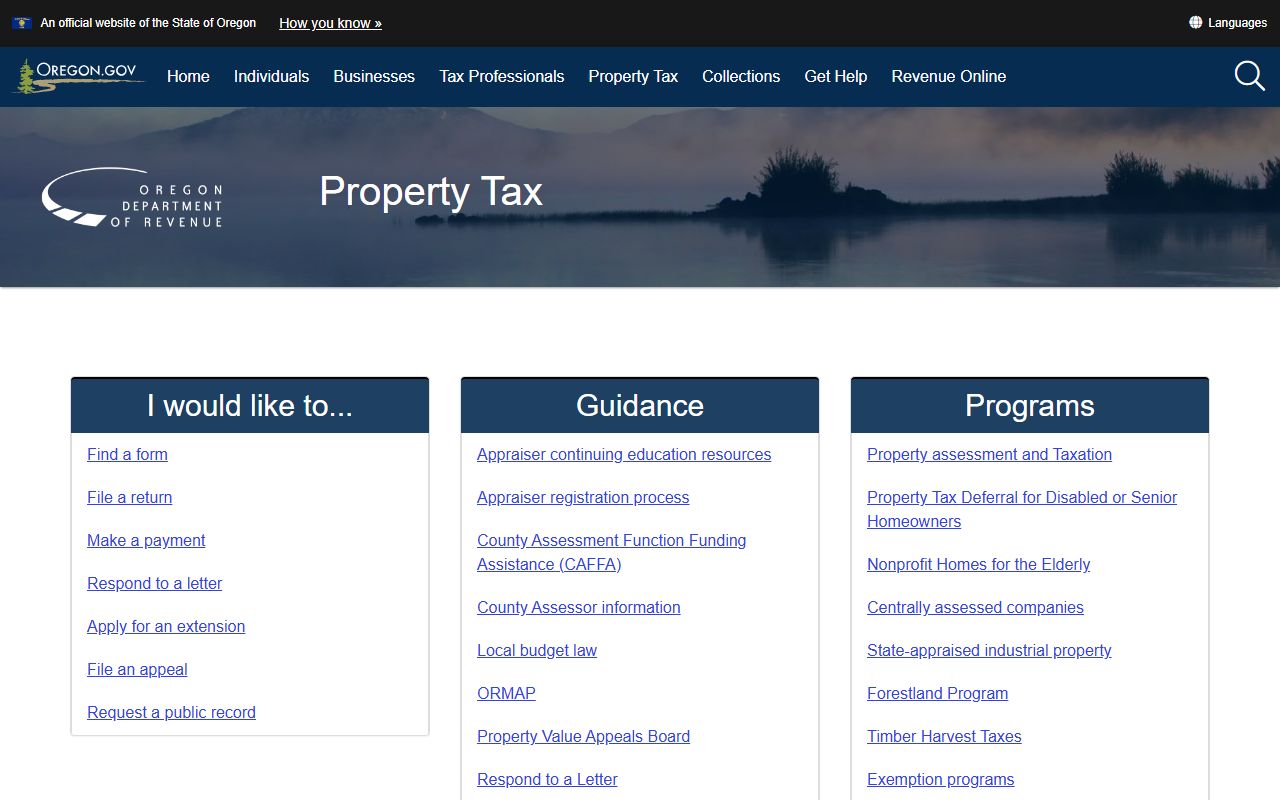
This page covers the rules that shape how Coos County values are calculated and how taxes are collected.
Note: Coos County property tax records are public and available to anyone without charge.
Coos County Property Tax Assessments
Each parcel in Coos County gets three values. Real market value estimates what the land and buildings would sell for. Maximum assessed value is capped under Measure 50 at a 3% annual increase, as defined in ORS 308.156. Assessed value is whichever is lower. That figure sets the base for the tax bill.
The coastal housing market in Coos County can move in ways that differ from inland areas. Oceanfront lots in Bandon may see sharp jumps in real market value while the maximum assessed value creeps up at just 3%. Inland parcels near Coquille or Myrtle Point tend to have smaller gaps between market and assessed values. The assessor tracks each parcel's unique history and applies Measure 50 rules accordingly.
Under ORS 307.030, all real and tangible personal property in Coos County is subject to assessment and tax. Exemptions exist for government land, religious sites, and qualifying charitable organizations. New construction is valued using the changed property ratio, which the ORS Chapter 306 framework helps regulate.
Oregon's Tax System and Coos County
Measure 5 passed in 1990. It set rate caps that still shape every Coos County tax bill. Schools top out at five dollars per thousand. General government is capped at ten per thousand. When all the levies in a tax code area add up past these limits, compression reduces the total and some districts get less money.
Measure 50 came along in 1997. It froze assessed values at 90% of 1995 levels and capped yearly increases at 3%. Many Coos County homes now have assessed values well below their market price. This protects owners from big tax hikes but also means two similar homes can have very different tax bills depending on when each was last sold or built.
The relationship between these measures creates the three-value system seen in every Coos County property tax record. Understanding these values helps owners make sense of their tax statements and decide whether an appeal is worth pursuing.
The image below shows the ORS 308.156 statute page, which defines the maximum assessed value cap affecting Coos County property tax records.
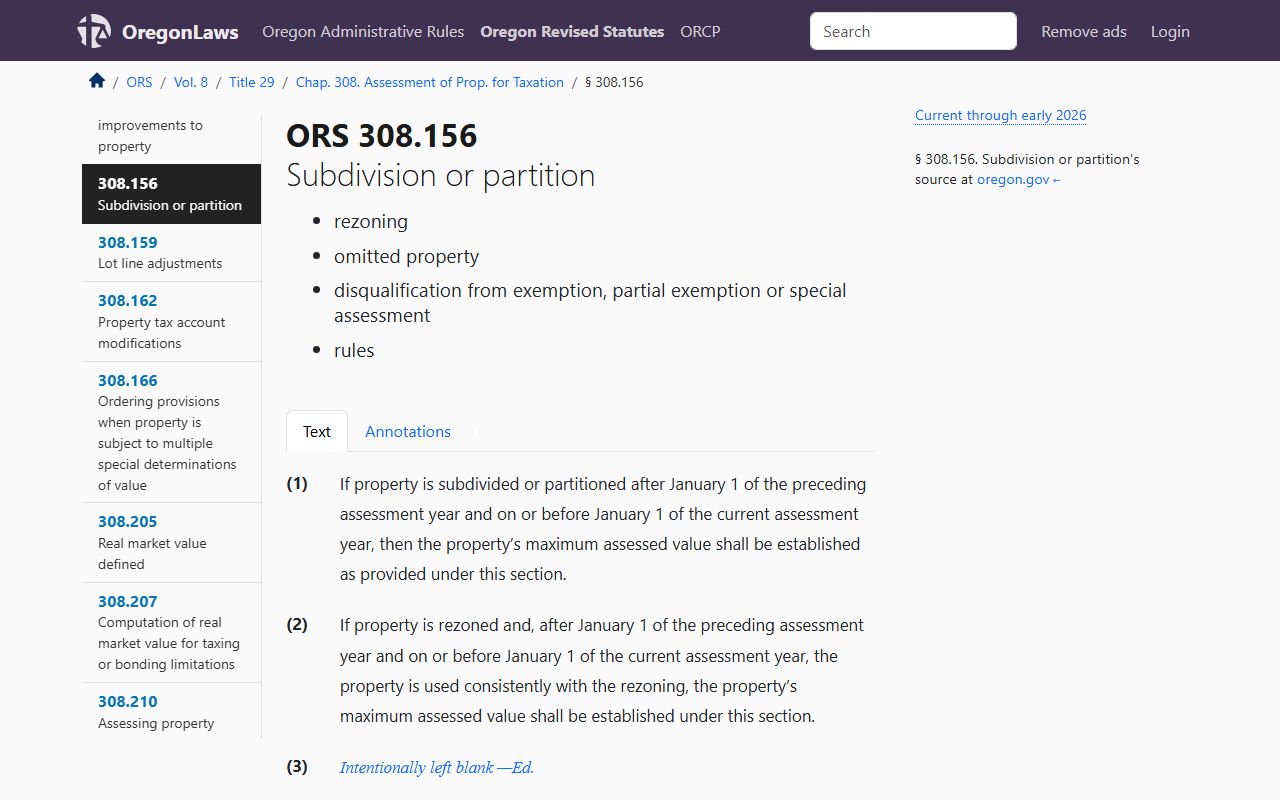
This statute limits annual increases and gives long-time Coos County owners significant tax savings compared to full market-rate assessments.
Appealing Coos County Property Tax Values
Owners who think their Coos County property tax assessment is wrong should contact the assessor first. Staff can check the record for errors and explain the value. If a building detail is wrong or a sale was misread, the fix may be simple.
Formal appeals go to the Coos County Property Valuation Appeals Board. The filing window runs from when tax statements are mailed until December 31. The owner fills out a form, states the value they believe is correct, and provides supporting evidence. Hearings happen in the spring.
Those who disagree with the board can appeal to the Oregon Tax Court within 30 days. The Magistrate Division is the standard path. It requires evidence of value such as comparable sales in Coos County or an independent appraisal. The Regular Division handles complex cases and appeals from the Magistrate level.
- Contact the assessor for an informal review
- File a formal appeal by December 31
- Attend the PVAB hearing with evidence
- Appeal to Oregon Tax Court if needed
Note: Recent sales of similar Coos County coastal or rural properties make the strongest evidence in an appeal.
Coos County Tax Exemptions
Several programs can reduce property taxes for qualifying Coos County owners. Senior citizens may defer their taxes until the home is sold. Disabled veterans receive a partial exemption. Timber and farm parcels can enter special assessment programs that tax the land based on use rather than full market value.
Applications go through the Coos County Assessor. Each program has its own rules and deadline. The Oregon DOR public records page offers forms and details on exemption programs. Timberland assessments are especially important in Coos County, where large forest holdings make up a significant share of the tax roll.
Recording and Payments in Coos County
Coos County records property documents through the County Clerk. Deeds, mortgages, and liens are filed to create the official ownership record. Recording fees follow state law. Public access to these documents is available at the clerk's office.
Tax payments are handled by the Coos County Tax Collector. Owners can pay online, by mail, or in person. Full payment by November earns a discount. Installment plans spread the cost over three payments. Late payments carry interest charges, and long-term nonpayment can lead to foreclosure under Oregon law.
The Oregon State Archives may hold historical Coos County property tax records that have been transferred from local offices. These archival documents can help researchers trace land ownership and tax history going back decades.
The screenshot below shows the Oregon State Archives records page.
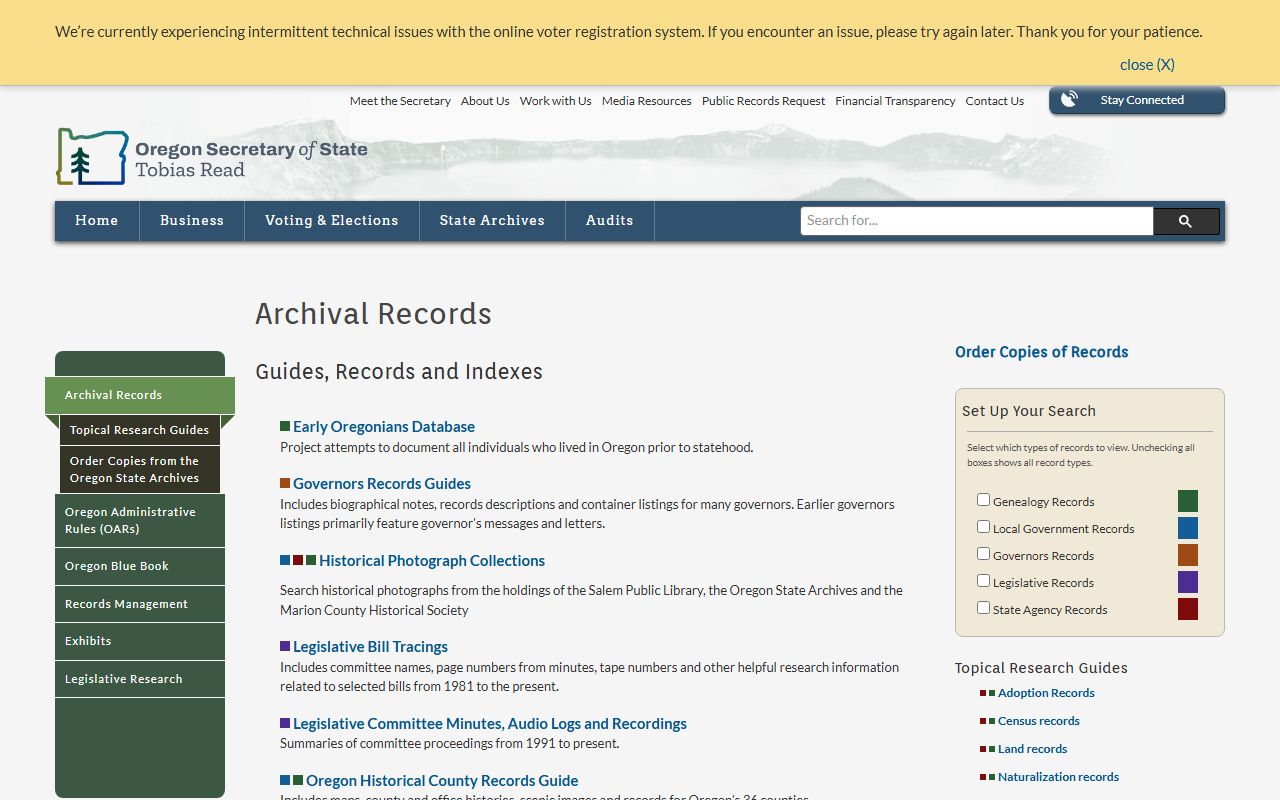
This resource is valuable for anyone researching the long history of property ownership along the southern Oregon coast.