
Clatsop County Tax Records
Clatsop County property tax records document every taxable parcel on the northern Oregon coast. The county stretches from the mouth of the Columbia River south to Cannon Beach and inland through forests and farmland. Astoria, the county seat, houses the Assessment and Taxation office where staff maintain records for properties in Seaside, Warrenton, Cannon Beach, and all unincorporated areas. Searching Clatsop County property tax records gives owners and buyers a clear picture of assessed values, tax amounts, and property details for coastal and rural land alike.
Clatsop County Assessment Office
Clatsop County Assessment and Taxation manages all property appraisals and tax collection in the county. The department serves a unique coastal landscape that includes oceanfront vacation homes, historic buildings in downtown Astoria, riverfront parcels along the Columbia, and rural timberland. Each type of property presents distinct challenges for the assessor.
Historic properties in Astoria receive special attention. Many buildings in the city's downtown qualify for special assessment programs that reflect their historic character. The assessor tracks these designations in the Clatsop County property tax records so that values and exemptions are applied correctly each year.
Coastal vacation homes are another key part of the Clatsop County tax base. Towns like Seaside and Cannon Beach attract visitors and second-home buyers from across the region. These properties often have high real market values due to ocean views and beach access. The assessor must keep pace with a volatile coastal market where prices can shift from year to year.
Search Clatsop County Property Tax Records Online
Clatsop County offers online property search tools. Taxpayers can look up accounts and view assessed values, tax amounts, and property details. The search system accepts owner names, addresses, and tax lot numbers. Results show the three key values for each parcel along with a breakdown of taxes by district.
Sales history data is also part of the Clatsop County property tax records. Past transfers with dates and sale prices help owners and buyers understand how values have changed over time. This data can be useful when preparing for a tax appeal or evaluating a purchase.
The Oregon Department of Revenue offers statewide tools that complement the county system. The state site explains Oregon's property tax rules and provides forms that apply in Clatsop County and every other county.
Note: Clatsop County property tax records are public and can be searched at no cost.
How Clatsop County Property Tax Values Are Set
Three values define every Clatsop County tax bill. Real market value reflects what the parcel would sell for on the open market. Maximum assessed value is limited by Measure 50 to a 3% annual increase under ORS 308.156. Assessed value is the lower of the two and serves as the tax base.
Measure 5 adds rate caps on top of this system. Schools cannot levy more than five dollars per thousand of real market value. General government is capped at ten dollars per thousand. When total levies exceed these caps, compression kicks in and some districts collect less. In Clatsop County, compression can affect funding for local services, especially in tax code areas with many overlapping districts.
New construction along the Clatsop County coast gets valued through the changed property ratio. This ratio, rooted in ORS Chapter 306, ensures that a new beach house in Cannon Beach carries a tax load in line with existing homes nearby. The ratio is recalculated each year for every property class in the county.
Below is the ORS Chapter 306 statute page, which sets the framework for property tax administration in Clatsop County.
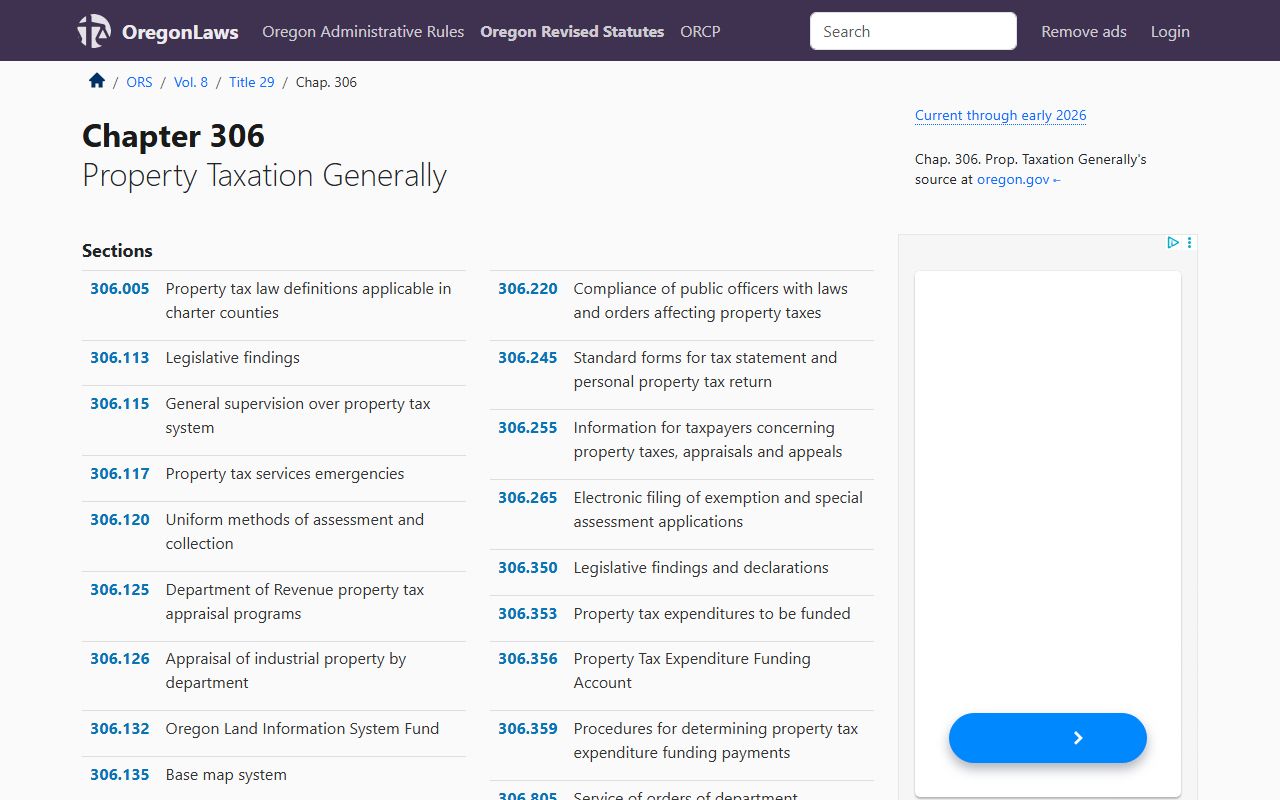
This chapter gives the Oregon Department of Revenue authority to supervise county assessors and ensure uniform standards across the state.
Clatsop County Property Tax Exemptions
Several programs can reduce or defer property taxes in Clatsop County. The assessor administers each one under state guidelines.
- Senior citizen property tax deferral
- Disabled veteran exemption
- Historic property special assessment
- Farm and forest use programs
- Qualifying charitable and religious exemptions
Under ORS 307.030, all real and tangible personal property in Clatsop County is subject to tax unless a specific exemption applies. Exempt parcels include government-owned land, churches, and certain nonprofit sites. Owners who want to apply for a deferral or exemption must file with the Clatsop County Assessor before the statutory deadline for the tax year in question.
Historic property programs are especially relevant in Clatsop County. Astoria's old town has many buildings that qualify for reduced assessments based on their age and designation. These programs encourage preservation of the county's architectural heritage while keeping tax bills manageable for owners of older structures.
Appealing Tax Values in Clatsop County
Clatsop County property owners can challenge their assessed values through a formal appeal process. The first step is always to contact the assessor. Staff can review the record and correct errors or explain how the value was reached. Many concerns get resolved at this stage.
If the owner still disagrees, a formal appeal goes to the Clatsop County Property Valuation Appeals Board. The filing window opens when tax statements arrive and closes on December 31. The board holds hearings in early spring. Owners present evidence such as recent sales of similar Clatsop County properties, independent appraisals, or photos showing property conditions that affect value.
Appeals from board decisions go to the Oregon Tax Court within 30 days. The Magistrate Division is the usual starting point. It offers a simpler process than the Regular Division. The court cannot lower a value just because the owner thinks it is too high. There must be solid evidence of what the property is actually worth.
Note: Comparable sales from Seaside, Cannon Beach, or Astoria carry strong weight in Clatsop County appeals.
Clatsop County Recording Services
The Clatsop County Clerk records deeds, mortgages, liens, and other property documents. Recording creates the official record of ownership and encumbrances on real property. Fees follow state guidelines and vary by document type and page count.
Public access to recorded documents is available at the clerk's office. Title companies and attorneys rely on these records to verify ownership and clear title before closings. The Oregon State Archives may hold older Clatsop County property documents that have been transferred from local storage.
The image below shows the Oregon State Archives page, a resource for historical Clatsop County property tax records.
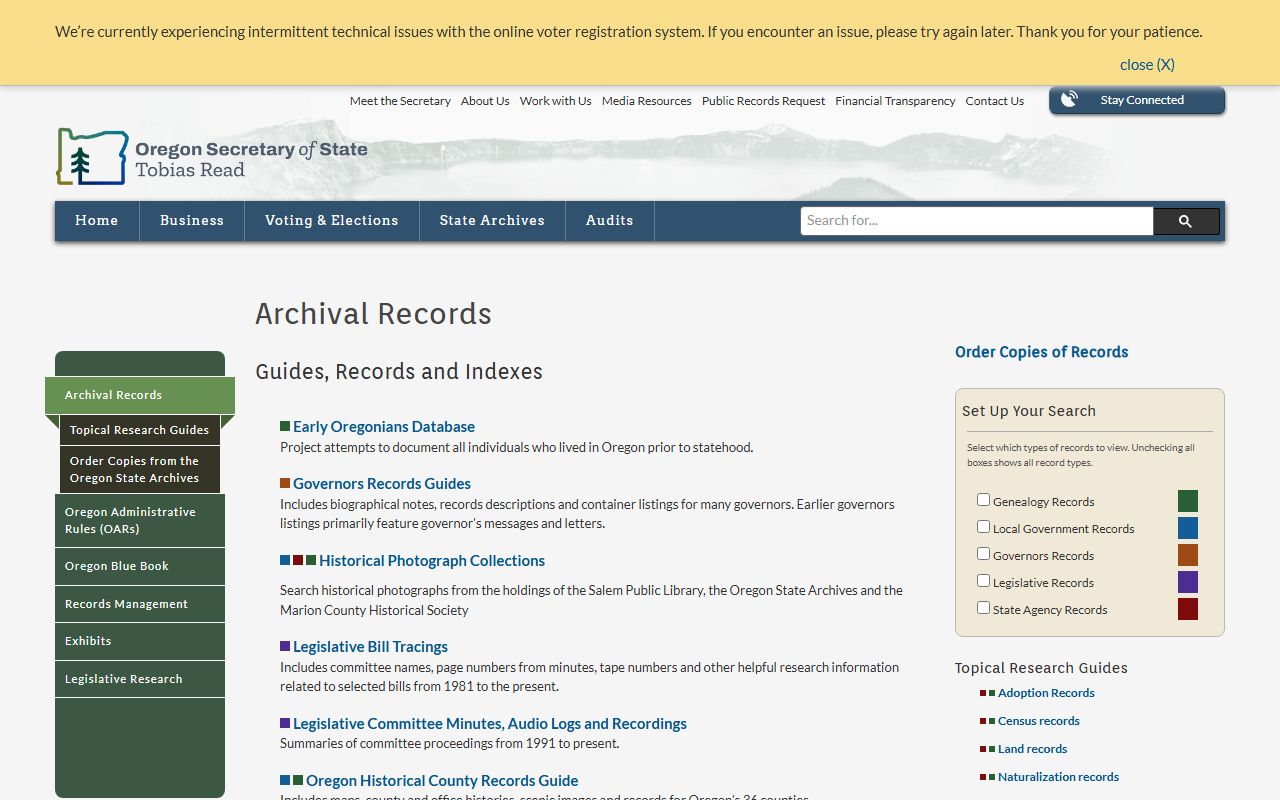
Researchers tracing land ownership along the Oregon coast often find valuable data in these archival collections.
Paying Clatsop County Property Taxes
The Clatsop County Tax Collector processes all property tax payments. Bills arrive each fall with due dates and payment options listed. Owners who pay in full by the November deadline receive a discount. Installment plans let owners split the bill across three payments.
Payments can be made online, by mail, or at the county office. Late payments draw interest. Taxes that remain unpaid for multiple years may trigger foreclosure proceedings. Clatsop County property tax records show the full payment history for each account, which helps owners stay on track.
The Oregon DOR public records page provides statewide information on tax collection rules and taxpayer rights that apply in Clatsop County.