
Lincoln County Coastal Tax Records
Lincoln County property tax records cover Oregon's central coast, including Newport, Lincoln City, Toledo, Waldport, and Depoe Bay. The county assessor maintains data on residential homes, oceanfront properties, commercial buildings, and recreational parcels. Searching these records provides access to assessed values, tax statements, and ownership details for every taxable property. Coastal properties often have unique valuation factors tied to location and ocean views. Lincoln County's online tools and in-office services make it easy to find the property tax information you need for any parcel along the coast or inland.
Lincoln County Assessment and Taxation
The Lincoln County Assessor's Office oversees property assessment and tax collection for the entire county. Staff appraise all taxable property each year, including homes, businesses, and coastal vacation rentals. Oceanfront and recreational properties receive special attention because their value depends heavily on location, views, and beach access.
The office maintains records on every parcel in the county. Each record includes the owner's name, assessed value, real market value, maximum assessed value, and property details like lot size and building type. The assessor also administers exemption programs including senior deferrals, veteran exemptions, and special assessments for farm and forestland. All applications must be submitted by deadlines set in state law.
Property tax payments go through the Tax Collector. Lincoln County accepts online payments, mail-in payments, and in-person payments at the county office. Oregon's payment schedule requires the full amount in November, with installment options through May for those who prefer to split the bill.
Searching Lincoln County Property Tax Records
Lincoln County provides an online property search tool on the assessor's website. You can look up any parcel by owner name, address, or account number. The system shows assessed values, tax amounts, and property traits.
Sales history is available for properties that have changed hands. This data includes transfer dates, sale prices, and document references. Buyers and appraisers use this information to compare values and understand market trends along the coast. The system runs around the clock, so you can access records at any time without visiting the office.
Taxpayers can also sign up for electronic delivery of their tax statements. This cuts down on paper mail and ensures you get your bill on time. Online payments can be made through the same county website, streamlining the entire process from lookup to payment.
Note: The online system may not show very recent transfers or changes until they are processed by staff.
The Oregon Department of Revenue provides property tax resources for all 36 counties.
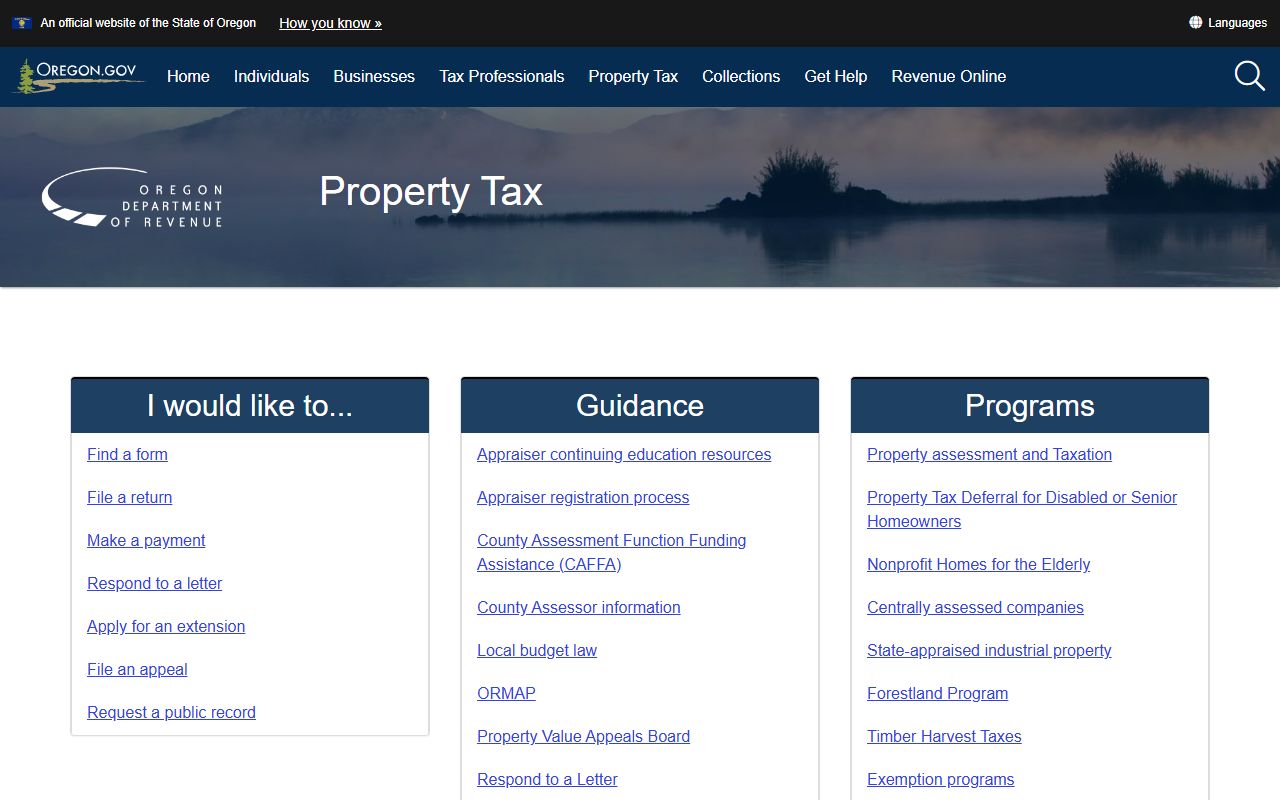
This site explains how Oregon's assessment system works, including the Measure 5 rate caps and Measure 50 value limits. Lincoln County taxpayers can find forms, guides, and answers to common questions here.
Coastal Property Valuation Factors
Lincoln County sits entirely on the Oregon coast. That geography creates valuation challenges that do not exist in most inland counties. Oceanfront homes can be worth several times more than similar homes a few blocks inland. View quality, beach access, and storm exposure all factor into the assessor's appraisal.
Vacation rentals and second homes make up a notable share of the tax roll. These properties often have different use patterns than primary residences. The assessor considers comparable sales from the local market when setting real market values. Under ORS 307.030, all real property must be assessed in equal and ratable proportion unless a specific exemption applies.
The maximum assessed value for most Lincoln County properties grows by no more than three percent each year under ORS 308.156. In a strong coastal market, this cap can create a wide gap between assessed value and real market value. That gap benefits long-term owners but means that new buyers may face a higher initial assessment.
Lincoln County Property Tax Appeals Process
Property owners who believe their assessment is too high can challenge it. Start by contacting the Lincoln County Assessor to discuss your concerns informally. The office can explain how your value was set and may correct errors on the spot.
If that does not resolve the issue, file a formal appeal with the Property Valuation Appeals Board. The window runs from when tax statements are mailed in late October through December 31. Your appeal must state the value you think is correct and include supporting evidence. Comparable sales data and independent appraisals are the strongest forms of evidence.
The board holds hearings between February and April. You can appear in person or submit written testimony. Decisions can be appealed to the Oregon Tax Court within 30 days. The Magistrate Division handles most property cases and charges a $281 filing fee.
Note: Evidence must reflect the property's value as of January 1 of the assessment year, not the date you file the appeal.
Recording Property Documents
The Lincoln County Recording Division handles deeds, mortgages, liens, and other property documents. Recording fees follow state law and county rules. Documents must meet Oregon's standards for format, content, and notarization before they will be accepted.
Once recorded, documents become part of the permanent public record. Public access terminals at the county office let you search recorded documents. E-recording services may be available through approved vendors for title companies and high-volume filers. Certified copies of recorded documents can be requested for a fee.
The Oregon State Archives preserves historical property records from across the state.
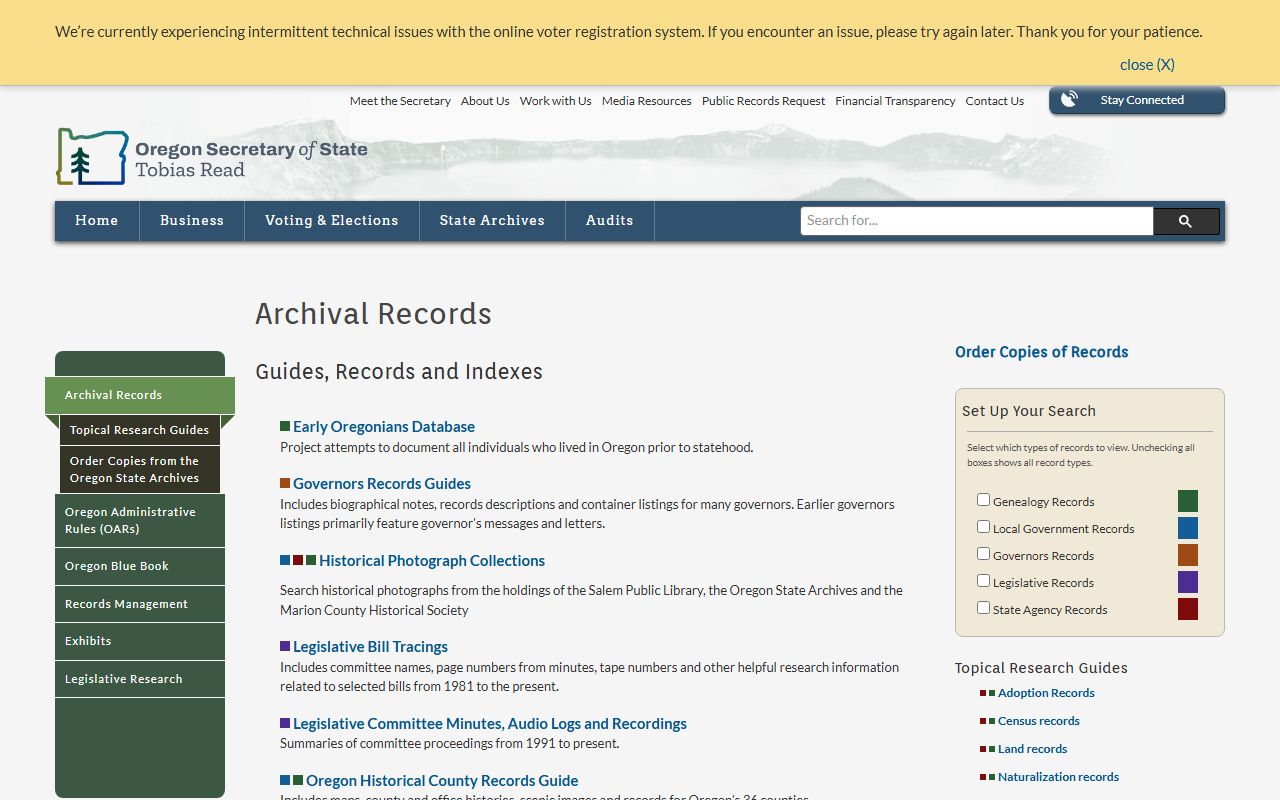
Older tax rolls, assessment lists, and ownership documents for Lincoln County may be held at the archives in Salem. Researchers can visit the reference room or check for digital collections online.
Lincoln County GIS and Property Maps
Lincoln County maintains a GIS mapping system for property assessment. The interactive maps show tax lot boundaries, property lines, and geographic data. Users can search by address or click on the map to view parcel information.
The county participates in the Oregon Map (ORMAP) project, which builds a statewide digital parcel mapping system. ORMAP data is used for property tax work, land use planning, and emergency response. These maps are available to the public at no cost and are updated as new surveys, deeds, and boundary changes are recorded.
Property Tax Exemptions on the Coast
Lincoln County residents may qualify for programs that reduce their property tax burden. The assessor's office handles all applications and can walk you through the requirements. Common programs include:
- Senior citizen tax deferrals for homeowners who meet age and income limits
- Disabled veteran exemptions tied to VA disability ratings
- Farm and forestland special assessments for qualifying properties
- Active military exemptions for deployed service members
Exemption records are part of your property tax file. When approved, the reduced value shows on your tax statement. Most programs require annual renewal or periodic verification. Missing a deadline can mean losing the benefit for an entire tax year. Under ORS Chapter 306, the state sets the rules for these programs and ensures they are applied consistently across all counties.
How Lincoln County Tax Bills Work
Your property tax bill is based on the assessed value of your property multiplied by the combined tax rate for your location. Different areas within Lincoln County fall under different tax code areas. Each area has its own mix of taxing districts, including the county, city, school district, and special districts like fire or water.
Measure 5 limits total tax rates. School levies are capped at $5 per $1,000 of real market value. General government levies are capped at $10 per $1,000. When the total exceeds these caps, compression reduces each district's share. The Oregon Department of Revenue publishes statistics each year showing how compression affects different parts of the state.
ORS 308.156 controls how maximum assessed values change from year to year.
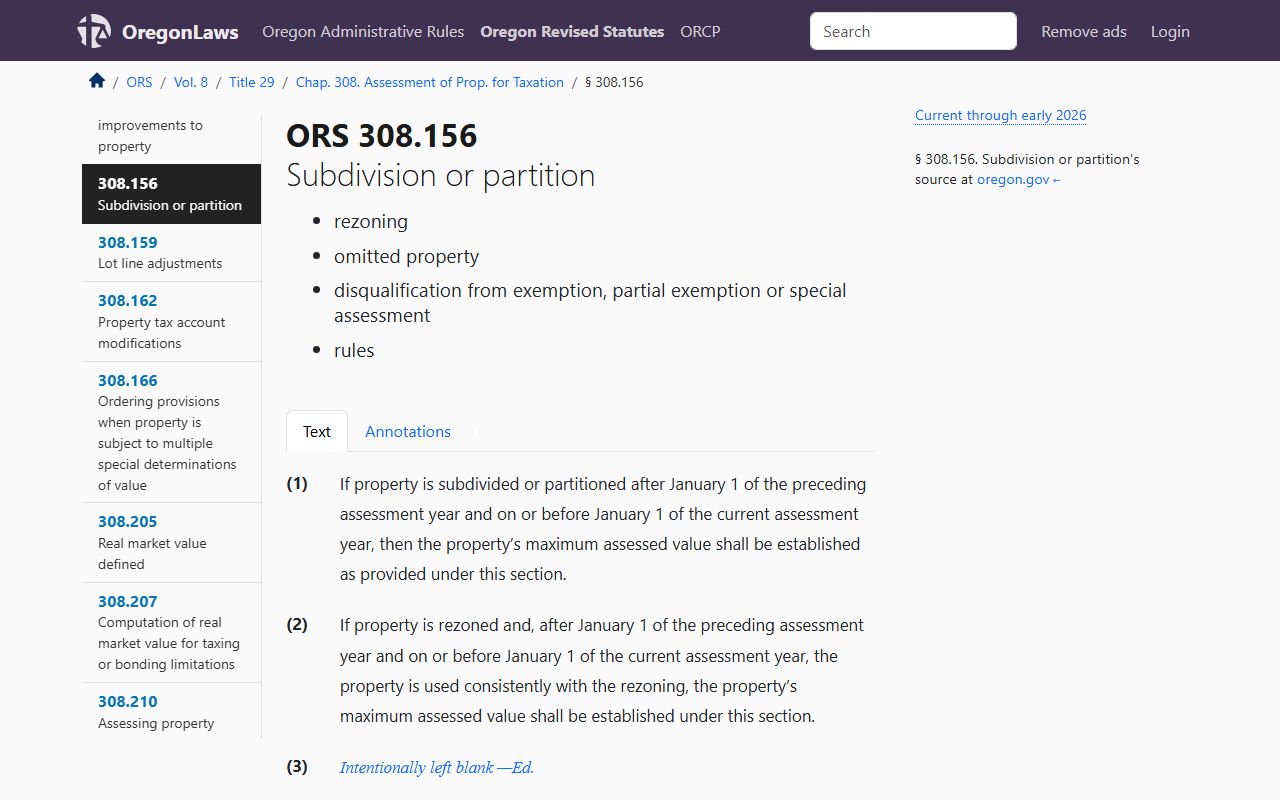
This statute limits most annual increases to three percent. It is a key part of Oregon's Measure 50 system and directly shapes what Lincoln County property owners pay each year.