
Crook County Property Tax Records
Crook County property tax records are public documents that track how land and buildings in central Oregon are assessed and taxed. The Crook County Assessor maintains these records for all parcels in the county, including the city of Prineville. You can search Crook County property tax records to find assessed values, tax amounts owed, and ownership details. These records help buyers, owners, and researchers understand how property taxes work in Crook County. The assessor office in Prineville serves as the main source for all Crook County property tax data.
Crook County Assessor Office
The Crook County Assessment and Taxation office handles all property assessment duties in the county. This office is based in Prineville, the county seat. Staff there maintain records on homes, farms, ranches, and commercial sites. Crook County has seen steady growth in recent years. New homes and land splits have added to the tax rolls. The assessor tracks each change and updates Crook County property tax records to reflect current conditions.
Oregon law requires every county assessor to find the real market value of all taxable property each year. In Crook County, that means appraising rural land, timber tracts, and town lots alike. The assessor also tracks personal property used in business. All of this data feeds into the Crook County tax roll, which is the master list of every taxable parcel and its values.
You can reach the Crook County Assessor at the county offices in Prineville. Staff can help you look up your account, explain your tax bill, or answer questions about how your property was valued.
Searching Crook County Property Tax Records
There are a few ways to search Crook County property tax records. The most direct method is to visit the assessor office in person. Staff can pull up any parcel by address, owner name, or tax lot number. They keep both current and past records on file. You can also call the office to ask about a specific account.
The Oregon Department of Revenue provides statewide guidance on property tax records. While the state does not host Crook County records directly, it sets the rules that shape how those records are kept. The state also publishes annual tax data that includes Crook County figures.
The Crook County property tax records show the lead-in to the state property tax portal below.
Oregon Department of Revenue Property Tax Division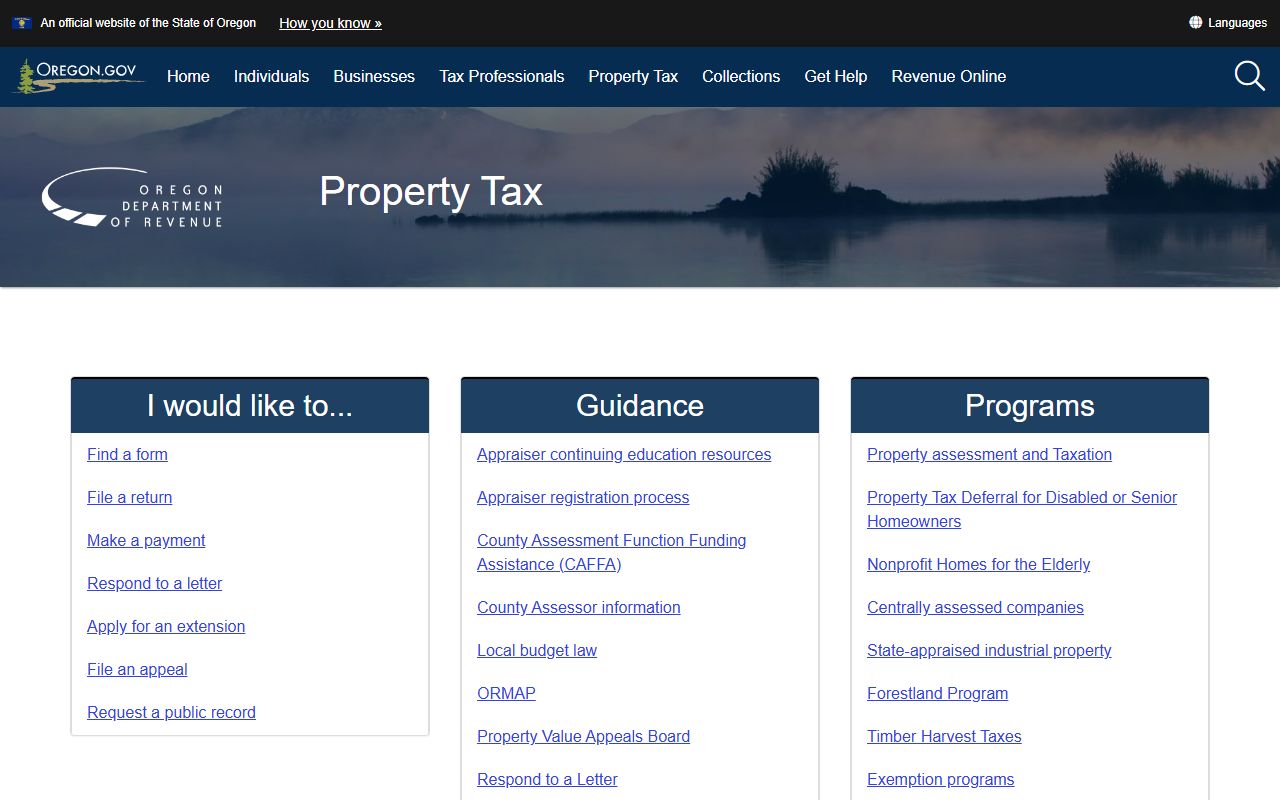
This state resource explains how Oregon property taxes work and links to forms that Crook County property owners may need.
How Property Tax Works in Crook County
Oregon uses a unique system to calculate property taxes. Two voter measures changed the rules decades ago. Measure 5, passed in 1990, set caps on tax rates. Measure 50, passed in 1997, created the Maximum Assessed Value system. Under ORS 308.156, the maximum assessed value can only grow by 3% each year for most properties. This cap keeps Crook County tax bills more stable from year to year.
Each Crook County parcel has two key values. The real market value is what the property would sell for on the open market. The maximum assessed value is the capped figure used to calculate taxes. Your tax bill is based on the lesser of these two amounts. That lower figure is your assessed value. In Crook County, many properties have a maximum assessed value well below their real market value due to years of growth in the local housing market.
Tax rates in Crook County depend on where a property sits. Each taxing district sets its own rate. Schools, fire districts, the city of Prineville, and the county itself all levy property taxes. Under ORS 307.030, all real and tangible personal property is subject to tax unless a specific exemption applies. The total rate is the sum of all district rates for a given tax code area in Crook County.
Note: Tax rates change each year based on budgets approved by local districts in Crook County.
Crook County Property Tax Exemptions
Several exemption programs can reduce a property tax bill in Crook County. Veterans with a qualifying disability may receive an exemption on a portion of their home value. Senior citizens and people with disabilities may defer their property taxes under state programs. Farm and ranch land may qualify for special assessment at its farm use value rather than market value. Timber land has its own deferral program as well.
To apply for any exemption in Crook County, contact the assessor office. Each program has its own rules and deadlines. Most applications must be filed by a set date each year. The assessor reviews each request and determines if the property meets the requirements under Oregon law.
Property Tax Records and Appeals in Crook County
If you believe your Crook County property was assessed too high, you have the right to appeal. The first step is to contact the assessor office and ask for a review. Many disputes can be resolved informally. If not, you can file a petition with the Crook County Board of Property Tax Appeals, also known as the BOPTA. This board meets each year to hear appeals from Crook County property owners.
You must file your petition by the deadline printed on your tax statement. The board will schedule a hearing where you can present evidence of your property's value. Bring comparable sales data, photos, or an appraisal to support your case. The board will issue a written decision after the hearing.
If you disagree with the board's decision in Crook County, you can appeal to the Oregon Tax Court. The Magistrate Division handles most property value cases. You must file within 30 days of the board order. The court reviews the evidence and can adjust your assessed value if the facts support a change.
The Oregon Tax Court page below outlines how this appeals process works for Crook County property owners.
Oregon Tax Court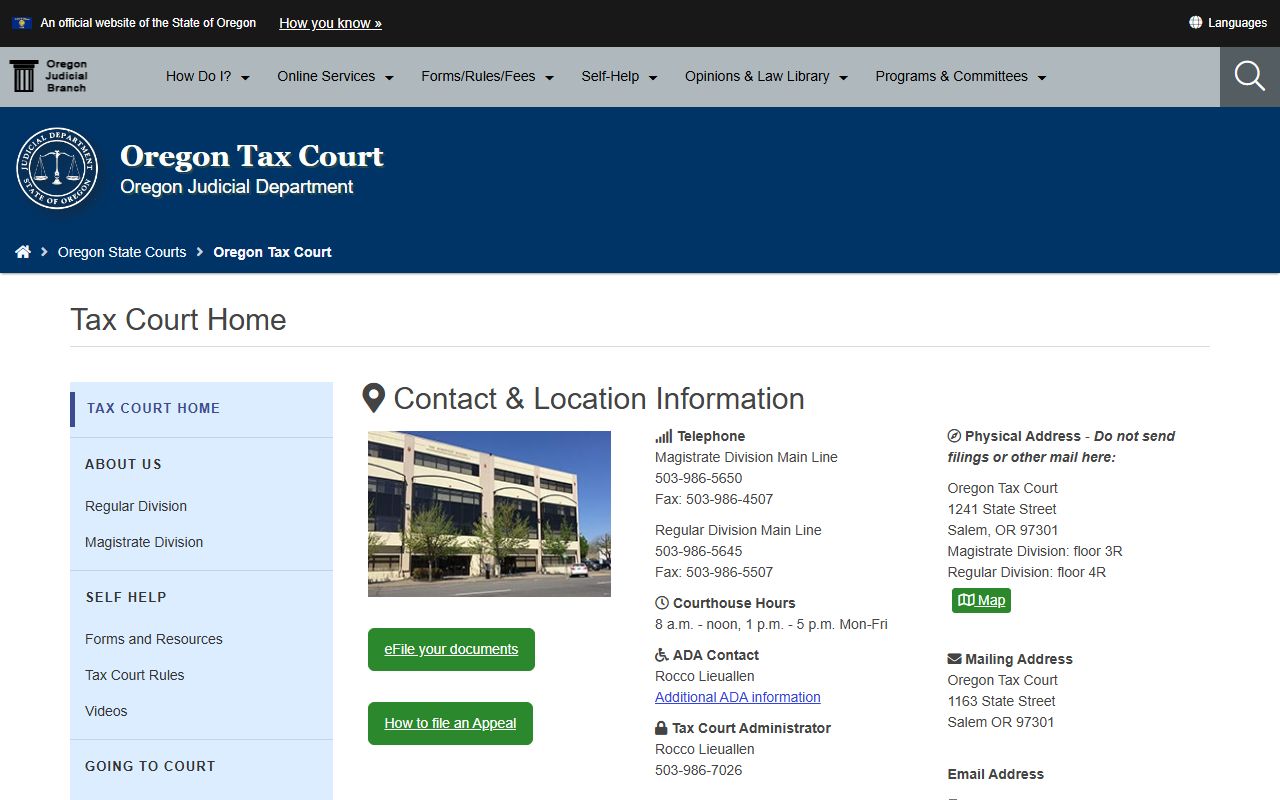
The Magistrate Division offers a less formal setting for Crook County residents to present their case without hiring a lawyer.
Recording Property Documents in Crook County
The Crook County Clerk records deeds, liens, and other documents that affect real property. When you buy or sell land in Crook County, the deed must be recorded with the clerk to make the transfer official. Recorded documents become part of the public record. Anyone can search them at the clerk office in Prineville.
Recording creates a permanent chain of title for each parcel in Crook County. This chain shows every owner and every lien from the past to the present. Title companies, lenders, and buyers rely on these records to verify ownership. The clerk charges fees set by state law for each document recorded.
Note: Always confirm current recording fees with the Crook County Clerk before submitting documents.
Crook County Tax Payments
The Crook County Tax Collector processes all property tax payments. Tax statements go out each fall. Oregon law allows you to pay in full by November 15 for a discount, or in thirds over the year. The three installment due dates are November 15, February 15, and May 15.
Late payments result in interest and penalties. If taxes remain unpaid for three years, the county may begin foreclosure proceedings. The Oregon State Archives maintains historical tax collection records that can be useful for research into past tax payments in Crook County.
The Oregon State Archives site shown below preserves historical Crook County property tax records and other government documents.
Oregon State Archives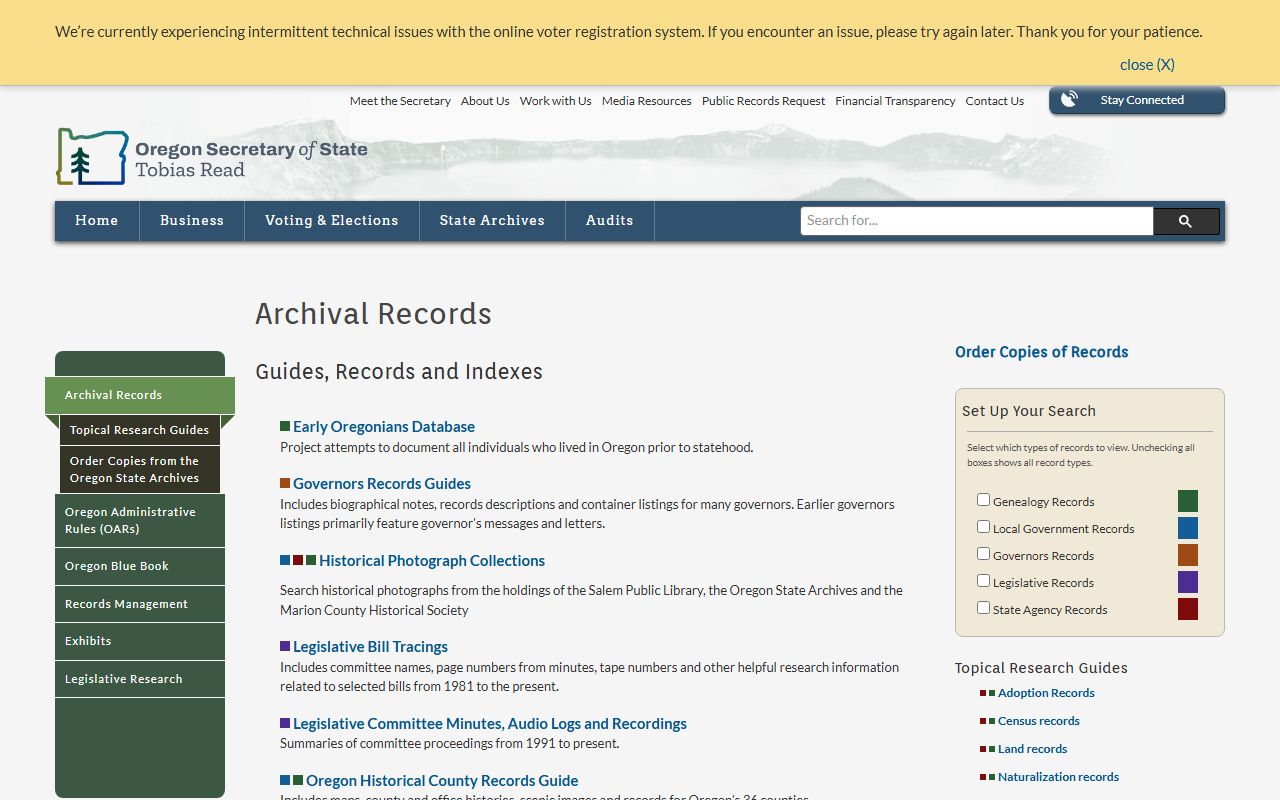
Historical tax rolls and assessment lists from Crook County may be found in the state archives collection.
Understanding Crook County Property Tax Statements
Your Crook County tax statement lists key details about your property. It shows the real market value, maximum assessed value, and assessed value. It also lists every taxing district that levies taxes on your parcel. The statement breaks down how much you owe to each district. Under ORS Chapter 306, tax statements must follow a standard format statewide.
The statement also shows your appeal rights and deadlines. Read it carefully each year. If any information looks wrong, contact the Crook County Assessor right away. Errors in property descriptions, ownership names, or values should be corrected as soon as possible.
Crook County property tax records stored in the assessor database include all past statements and payment history. This data is useful when buying or selling property, refinancing a loan, or settling an estate.
Oregon Property Tax Laws Affecting Crook County
Oregon Revised Statutes govern how Crook County assesses and collects property taxes. ORS Chapter 306 covers general property tax administration. It gives the Oregon Department of Revenue authority to supervise county assessors, including the Crook County Assessor. The state conducts ratio studies each year to ensure assessments are fair and uniform across Crook County.
The Oregon Department of Revenue public records page explains how to request state-level property tax data. This can be helpful if you want broader context for Crook County assessment trends. The state publishes tax statistics that show how Crook County compares to other counties in Oregon.
These laws protect Crook County property owners by ensuring consistent and transparent assessment practices. They also give owners clear paths to challenge values they believe are wrong.
Note: Oregon law changes from time to time, so check current statutes when researching Crook County property tax rules.