
Harney County Tax Assessment Records
Harney County property tax records cover one of the largest counties by land area in the entire United States. Located in southeastern Oregon, the county includes the communities of Burns and Hines. Property tax records here reflect a landscape dominated by ranch lands, rangeland, and agricultural holdings. Searching these records helps buyers, owners, and researchers find assessment values, tax payment history, and ownership details for parcels across this vast rural county.
Harney County Assessor Office
The Harney County Assessor handles all property assessment work in the county. The office is in Burns, the county seat. Staff there identify each taxable parcel. They measure land and structures. They assign values based on current market data. The assessor also tracks ownership changes as deeds are recorded.
Ranch and agricultural properties make up a large share of the tax roll in Harney County. Many of these parcels qualify for special assessment under Oregon farm and ranch programs. Under ORS 307.030, all real property in the state is subject to assessment and taxation unless a specific exemption applies. The assessor must locate and value every parcel, from small lots in Burns to vast cattle ranches east of town.
Note: The Harney County Assessor office is separate from the Tax Collector, which handles payment processing.
Searching Property Tax Records in Harney County
Harney County provides property record access through the Assessor's Office. You can look up parcels by owner name or tax lot number. The records show assessed values, real market values, and tax amounts owed. Sales history may also be available for properties that have changed hands.
For those who prefer to visit in person, the office in Burns can pull up records on site. Staff can print copies of tax statements and assessment details. Phone inquiries are also accepted for basic account lookups. This is helpful for people who live far from the county seat, which is common given the size of Harney County.
The Oregon Department of Revenue provides statewide property tax resources that supplement what is available at the county level. Their site explains how Oregon's property tax system works and offers forms and guides for taxpayers in every county.
Property Tax Values and Measure 50
Oregon property tax records include three key values for each parcel. Real market value reflects what the property would sell for on the open market. Maximum assessed value is a figure set by Measure 50, which voters approved in 1997. Assessed value is the lesser of those two numbers, and it determines the tax bill.
Under ORS 308.156, maximum assessed value can only grow by 3% each year for most properties. This cap means that in a rising market, a property's assessed value may fall well below its real market value. In Harney County, where land values have historically been stable, the gap between these figures is often smaller than in urban parts of Oregon.
The Oregon Department of Revenue oversees property tax resources and provides a Tax Court for formal disputes about assessed values. Understanding these three values is essential when reading any Harney County property tax record.
The Oregon State Archives maintains historical property tax records that date back to the territorial period, which can be useful for researchers studying land ownership patterns in southeastern Oregon.
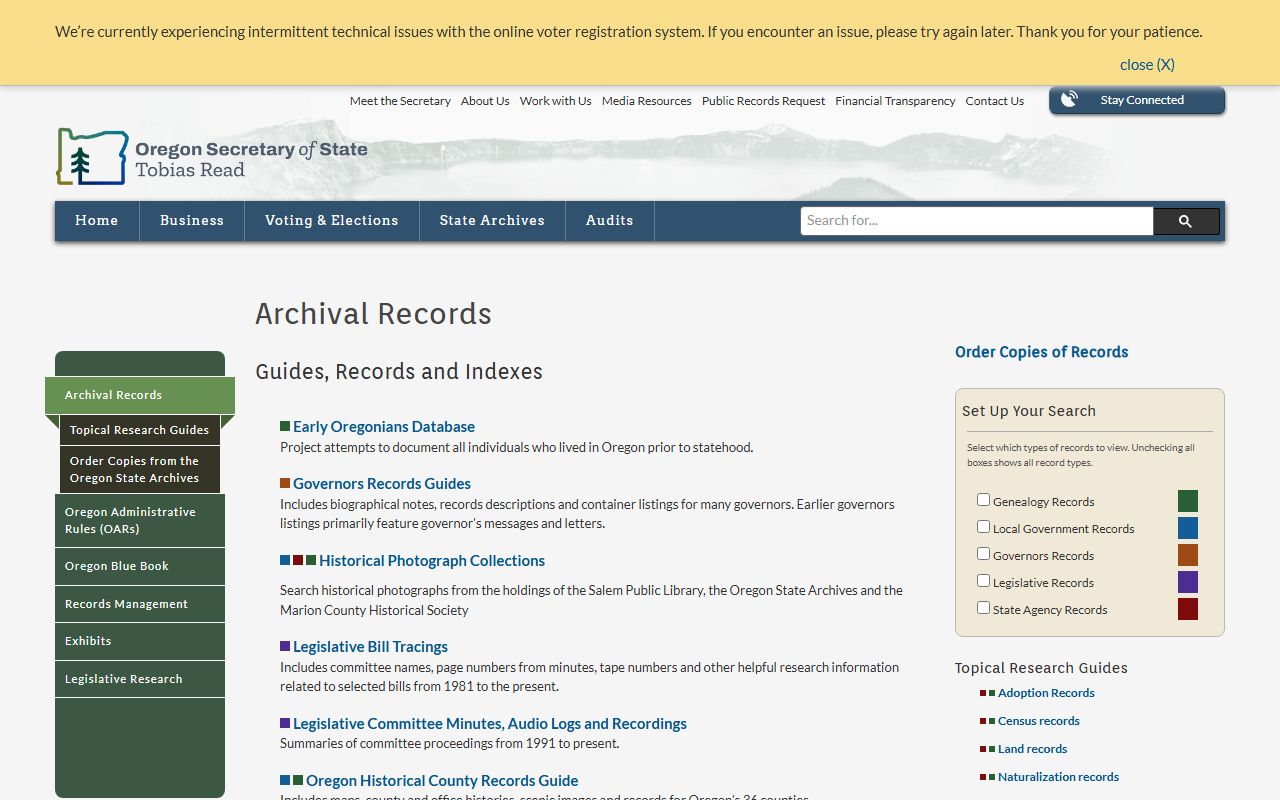
Archived records include old assessment rolls and taxpayer lists from the early days of settlement in Harney County.
Harney County Property Tax Exemptions
Several exemption programs reduce or eliminate property taxes for qualifying owners in Harney County. Senior citizens may defer their taxes under state programs. Veterans with qualifying disabilities receive partial exemptions. Religious and charitable organizations may be exempt from property taxes entirely.
Farm and forestland special assessments are particularly important in Harney County. Under these programs, qualifying agricultural land is assessed based on its income potential rather than its full market value. This results in lower tax bills for working ranches and farms. Owners must apply and meet ongoing use requirements to keep the special assessment. If the land is removed from the program, the owner may owe back taxes for the difference in value.
Note: Exemption applications must be filed by specific deadlines each year with the Harney County Assessor.
Recording Property Documents
The Harney County Clerk records property documents such as deeds, liens, and mortgages. These recorded documents become part of the official public record. When a property changes hands, the new deed is recorded with the Clerk and then reflected in the Assessor's records.
Recorded documents are available for public inspection. You can request certified copies for a fee. These records are separate from the assessment records maintained by the Assessor, but both sets of records work together to create a complete picture of property ownership and taxation in Harney County.
Harney County Property Tax Appeals
Property owners who disagree with their assessment have the right to appeal. The first step is to contact the Assessor's office for an informal review. Many disputes are resolved at this stage. If the issue is not resolved, a formal appeal can be filed with the county's Property Valuation Appeals Board.
Appeals must be filed after tax statements are mailed and before December 31 of that year. The PVAB holds hearings where owners present evidence of their property's value. Comparable sales data and independent appraisals are common forms of evidence. Under ORS Chapter 306, the state provides the legal framework for these appeals. If the PVAB decision is unsatisfactory, the owner can appeal to the Oregon Tax Court within 30 days.
Harney County Tax Payments
The Harney County Tax Collector processes all property tax payments. Tax statements are mailed each fall. Payments are due in three installments: November 15, February 15, and May 15. A discount is available for taxpayers who pay the full year by November 15.
Payments can be made by mail or in person at the Tax Collector's office in Burns. Late payments incur interest charges as required by state law. If taxes remain unpaid for three years, the property may be subject to tax foreclosure proceedings.
The Oregon Department of Revenue public records page explains how taxpayers can access their own tax records through the state's Revenue Online system.
Revenue Online offers 24/7 access to tax account information for registered users across all Oregon counties.
Understanding Harney County Property Tax Records
Each property tax record in Harney County contains several pieces of information. The record shows the owner's name and mailing address. It lists the tax lot number, which identifies the parcel on assessment maps. The legal description defines the property boundaries. Assessment values appear for the current year and sometimes prior years as well.
Tax records also show the tax code area, which determines which taxing districts levy taxes on the property. In Harney County, these districts may include the county itself, a school district, a fire district, and other special districts. Each district's rate is applied to the assessed value to calculate the total tax bill. Measure 5 limits cap the combined rate at $10 per $1,000 of real market value for general government and $5 per $1,000 for schools.
The Oregon DOR Property Tax Division oversees the statewide property tax system and provides guidance to all 36 county assessors.
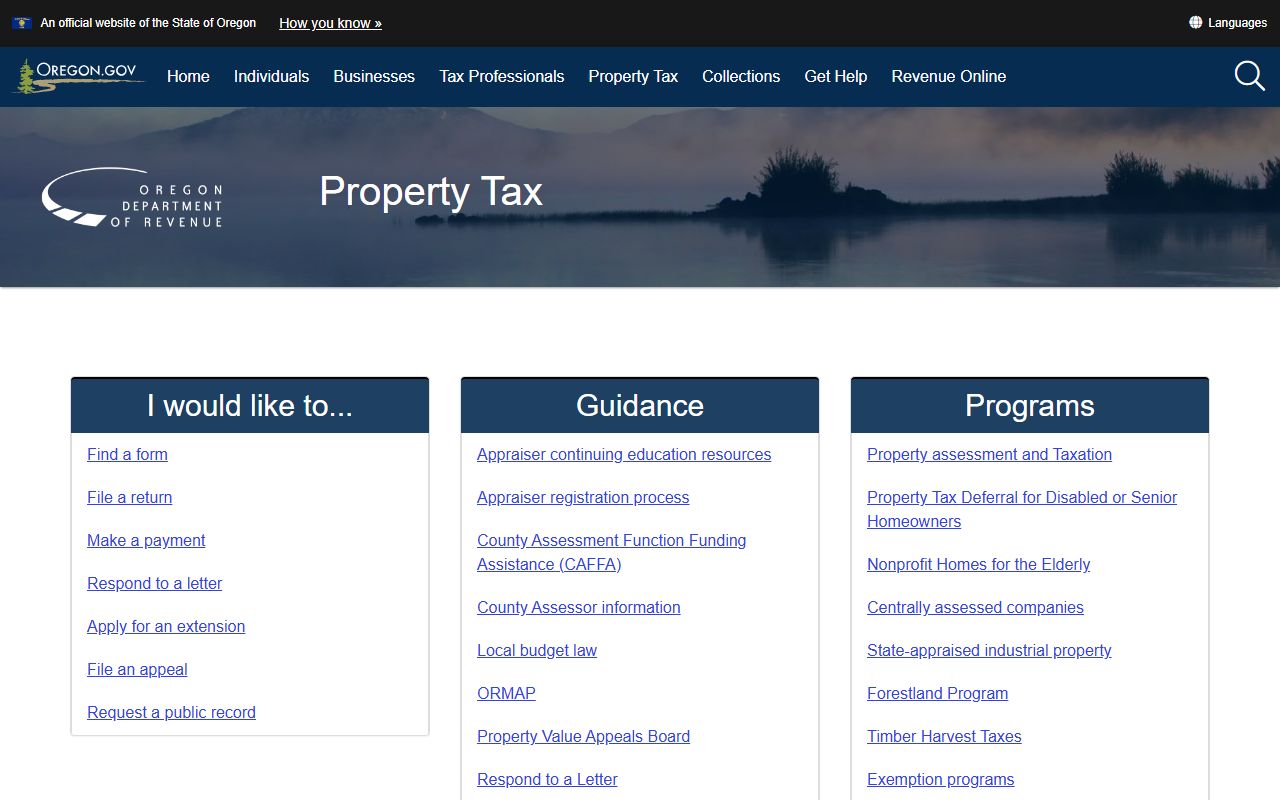
This state oversight ensures that assessment practices in Harney County meet the standards required by Oregon law.
Note: Harney County property tax records are public information and can be accessed by anyone, not just the property owner.