
Grant County Property Tax Lookup
Grant County property tax records contain the assessment and tax information for every parcel in eastern Oregon's Blue Mountain region. The Grant County Assessment and Taxation office keeps these records for Canyon City, John Day, Prairie City, Monument, and all surrounding areas. You can look up Grant County property tax records to find current values, past assessments, and tax payment details. Whether you own forest land, ranch property, or a home in town, these public records are your key to understanding how property taxes work in Grant County.
Grant County Assessment and Taxation
The Grant County Assessment and Taxation office oversees property assessment in this large, rural county. The office is in Canyon City, the county seat. Staff maintain records on rural homes, agricultural land, forest tracts, and commercial properties throughout Grant County.
Forestland makes up a large share of the Grant County tax base. Thousands of acres are subject to special assessment under Oregon's timber programs. The assessor must value these lands according to state formulas that consider timber type, growth rates, and land quality. Agricultural land also receives special assessment when it is in active farm or ranch use. These programs are vital to Grant County, where most of the land is in resource use.
The Grant County Assessor also tracks personal property used in business. Logging equipment, ranch machinery, and commercial fixtures all appear on the Grant County tax roll. Every taxable item gets a value and contributes to the local tax base.
How to Search Grant County Property Tax Records
You can search Grant County property tax records by contacting the assessor office in Canyon City. Staff can look up any parcel by address, owner name, or tax lot number. They can explain your values, describe how your tax was calculated, and provide copies of assessment records.
Grant County is a small, rural jurisdiction. Online tools may be limited. The best way to get current Grant County property tax data is to call or visit the office directly. Staff are familiar with local properties and can answer questions on the spot.
The Oregon Department of Revenue provides statewide guidance. The state publishes tax statistics each year that include Grant County data. You can also find forms and guides that explain Oregon's property tax system in plain language.
The state property tax page below is a useful resource for Grant County property owners.
Oregon DOR Property Tax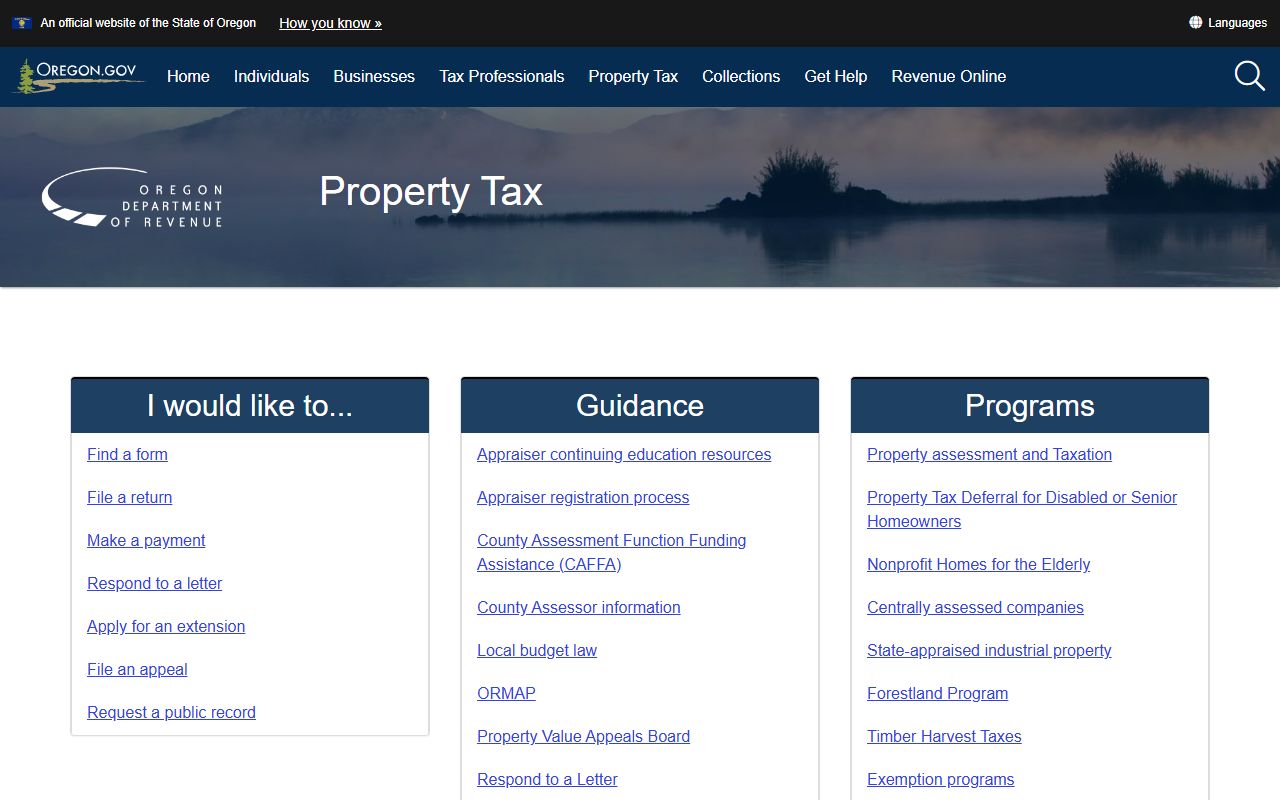
The Department of Revenue site explains assessment rules, exemption programs, and appeal rights that apply in Grant County.
Grant County Property Tax Values Explained
Every Grant County parcel has two key values. Real market value is what the property would sell for. Maximum assessed value is a capped figure. Under ORS 308.156, maximum assessed value grows by no more than 3% per year. Your assessed value is the lower of these two amounts. That is the number used to calculate your Grant County tax bill.
In Grant County, many properties have a maximum assessed value close to or even above the real market value. This is because growth in property prices has been slower in eastern Oregon than in urban areas. When real market value drops below maximum assessed value, your assessed value drops too. The system protects Grant County property owners in either direction.
Measure 5 rate limits also apply. General government taxes cannot exceed $10 per $1,000 of real market value. School taxes are capped at $5 per $1,000. These limits ensure that Grant County property owners are not overtaxed regardless of how many districts levy against their property.
Note: The assessor updates real market values each year based on sales data and market conditions in Grant County.
Grant County Property Tax Exemptions
Several state programs can reduce a Grant County property tax bill. Under ORS 307.030, all property is taxable unless a specific exemption applies. The Grant County Assessor processes applications for these programs.
Available programs include:
- Disabled veteran exemptions for qualifying homeowners
- Senior and disabled citizen tax deferrals
- Farm use special assessment for active agricultural land
- Forestland special assessment for timber parcels
- Nonprofit and government property exemptions
Each program has filing deadlines and eligibility rules. The Grant County Assessor can explain which ones apply to your situation. Most applications must be filed early in the year. Late applications are generally denied, so act promptly if you think you qualify.
Appealing Grant County Property Tax Records
If you disagree with your Grant County assessment, you have the right to appeal. Contact the assessor office first. In a small county, a conversation can often clear things up. The assessor may find an error or explain how the value was determined. If that does not resolve the matter, file a petition with the Grant County Board of Property Tax Appeals.
The board meets each year to hear appeals. File by the deadline shown on your tax statement. Bring evidence of your property's value. Recent sales in Grant County, photos, or professional appraisals all help make your case. The board issues a written decision after the hearing.
If you want to appeal further, go to the Oregon Tax Court. The Magistrate Division handles most Grant County property tax cases. You must file within 30 days of the board order. The court requires evidence of value as of January 1 of the assessment year.
Recording Documents in Grant County
The Grant County Clerk records official property documents. Deeds, mortgages, liens, and easements must be recorded to become part of the public record. The clerk office is in Canyon City. Anyone can search recorded documents during business hours.
Recording a deed in Grant County triggers an update to the property tax records. The assessor changes the ownership on the tax roll so the new owner receives future tax statements. This connection between recording and assessment keeps Grant County property tax records reliable.
The ORS 307.030 resource below describes which property is subject to tax in Grant County and throughout Oregon.
ORS 307.030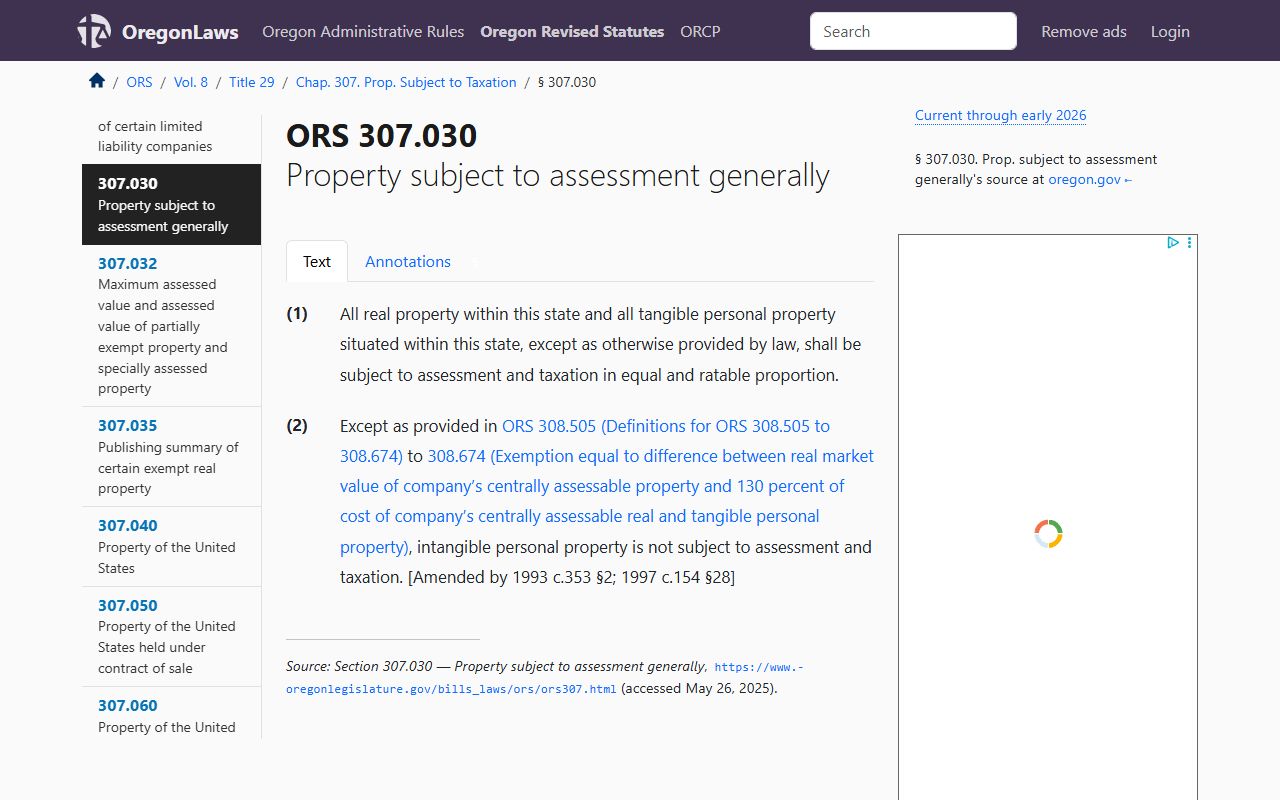
This statute establishes that all real and tangible personal property in Grant County is taxable unless an exemption applies.
Note: Always check current recording requirements with the Grant County Clerk before submitting any documents.
Grant County Tax Payments
The Grant County Tax Collector processes all property tax payments. Statements arrive each fall. You can pay the full amount by November 15 for a discount. Oregon law also allows three installments. The due dates are November 15, February 15, and May 15.
Late payments result in interest charges. If taxes remain unpaid for three years, the county may pursue foreclosure. Staying current on your Grant County property taxes protects your ownership and avoids extra costs.
Oregon Laws Affecting Grant County Property Tax Records
ORS Chapter 306 sets the rules for property tax administration in Grant County. The Oregon Department of Revenue supervises county assessors and conducts ratio studies. These studies compare assessed values to sales prices to make sure Grant County assessments are fair and uniform.
The Oregon Department of Revenue public records page explains how to request state-level property tax data. The Oregon State Archives preserves historical Grant County tax rolls and assessment records. Researchers and genealogists often use these archives to trace land ownership in eastern Oregon.
The state archives page is shown below for those interested in historical Grant County property tax records.
Oregon State Archives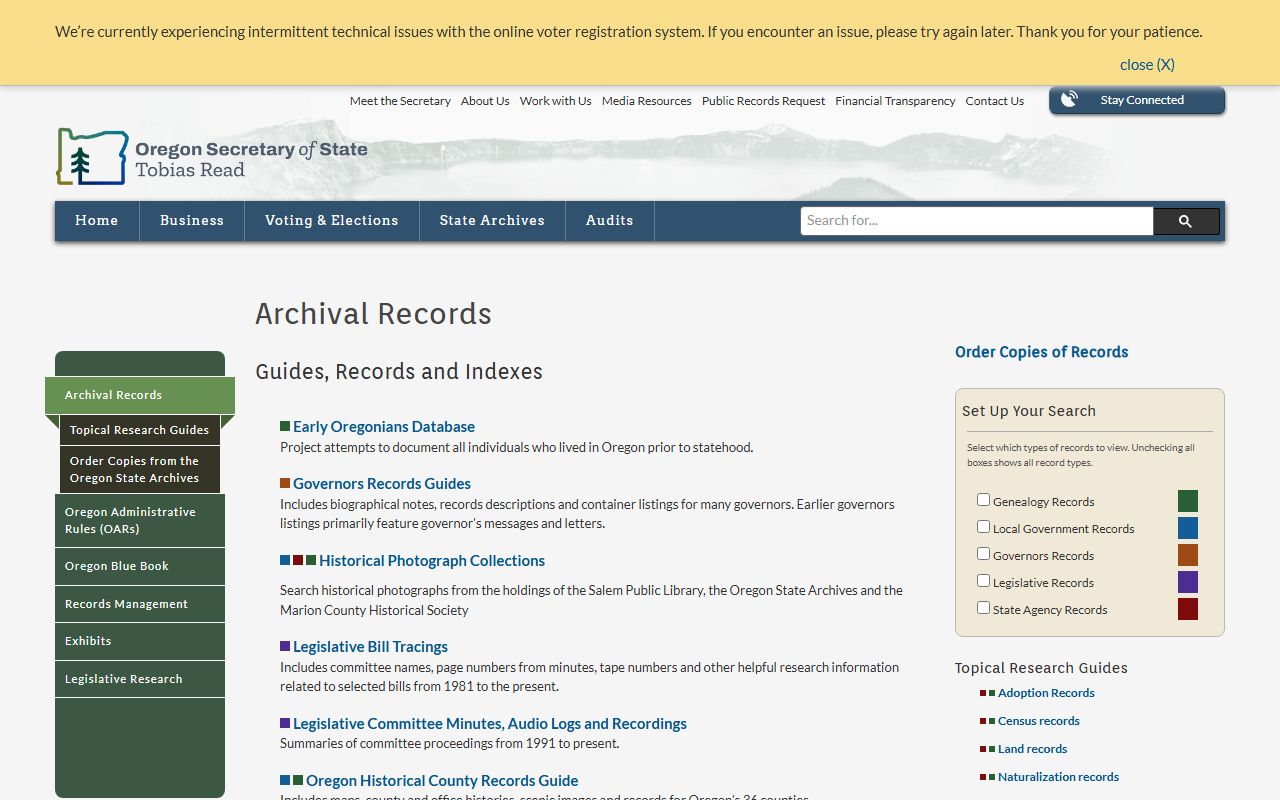
Historical tax rolls from Grant County and other Oregon counties are stored in the state archives in Salem.