
Malheur County Tax Assessment Records
Malheur County property tax records cover eastern Oregon's largest county by area. The assessor's office serves Ontario, Nyssa, Vale, and surrounding agricultural communities along the Idaho border. Searching these records reveals assessed values, ownership details, and tax payment history for farm, ranch, residential, and commercial properties. Irrigated cropland and rangelands make up a large share of the county's tax roll. Malheur County provides property record access through the assessor's office and online tools, giving residents and researchers a clear path to the information they need about any taxable parcel.
Malheur County Assessment Office
The Malheur County Assessor handles property appraisal and assessment for the entire county. Staff value agricultural properties, rural homes, and commercial buildings based on market data and property characteristics. The office maintains ownership records, assessment values, and property details for every taxable parcel.
Agriculture dominates the landscape in Malheur County. Extensive irrigated farmland produces onions, sugar beets, potatoes, and other crops. These properties often qualify for farm special assessments under Oregon law. The program values working land based on its agricultural income potential rather than its market sale price. This can significantly lower the assessed value for qualifying farms.
Ranch and rangeland properties also receive attention from the assessor. Open range covers much of the county east of the Treasure Valley. These large parcels require different appraisal methods than residential lots in Ontario or Vale. The assessor applies state guidelines to ensure each property type is valued consistently and fairly.
Searching Malheur County Property Tax Records
Malheur County provides property record access through the Assessor's Office. You can look up parcels to find ownership data, assessed values, and basic tax information. The system helps residents check their accounts and assists buyers in researching properties before making offers.
For detailed records or historical data, contact the assessor's office directly. Staff can pull up past tax statements, assessment history, and property maps that may not be fully available through the online system. Bring your property address or account number when you call or visit to speed up the search.
Note: The assessor's office can also help explain how your assessed value was calculated and what factors went into the appraisal.
Oregon's Department of Revenue oversees property tax administration in all 36 counties.
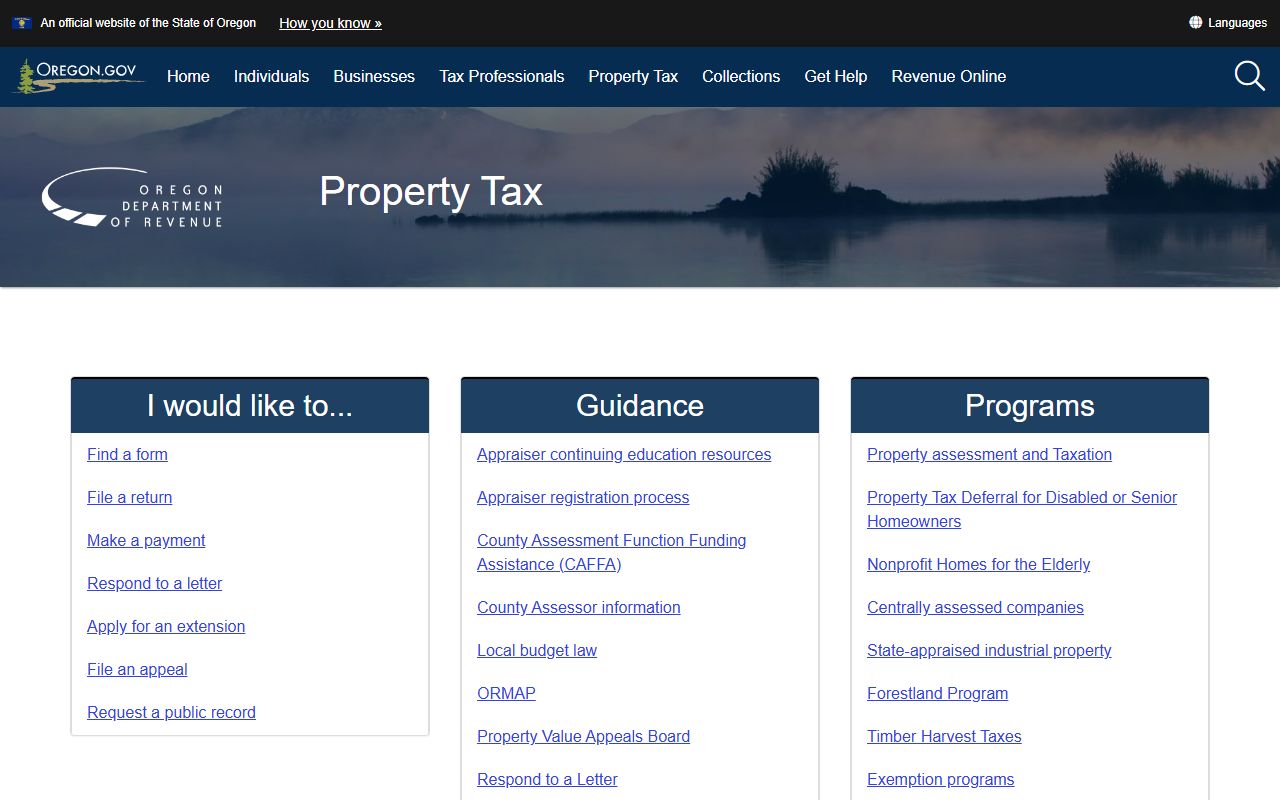
This state portal covers how assessments work, what Measure 5 and Measure 50 mean for your taxes, and where to find forms and guides. It applies directly to Malheur County property owners.
Agricultural Property Tax Records
Farm and ranch properties represent a core part of the Malheur County tax roll. Oregon offers special assessment programs that value agricultural land based on its farm use rather than its development potential. Under ORS 307.030, all real property is subject to assessment and taxation, but farm deferrals create a lower taxable value for qualifying land.
Irrigated cropland in the Treasure Valley is among the most productive in Oregon. The assessor must distinguish between irrigated and dryland parcels, account for water rights, and consider soil quality when setting values. These details are part of the property tax record and can be reviewed by the owner or any member of the public.
If farm property is removed from the special assessment program, the owner may owe back taxes on the deferred amount. This is called a potential additional tax liability, and it appears in the property records. Buyers of agricultural land should review this figure before closing a purchase.
Property Tax Payments in Malheur County
The Malheur County Tax Collector processes all property tax payments. Oregon taxes are billed each fall, with the full amount due in November. Paying in full by the deadline earns a discount of roughly three percent. A two-thirds payment by the same date gets a smaller discount.
Those who prefer to spread out their payments can use the three-installment plan. Payments are due in November, February, and May. Late payments trigger interest charges under state law. If taxes go unpaid for three years, the county may start foreclosure proceedings. Keeping your account current protects your ownership and avoids penalties.
Malheur County Property Tax Appeals
Property owners who think their assessed value is too high can appeal. The first step is an informal talk with the assessor's office. Staff can explain how the value was set and may correct errors without a formal filing.
If that does not resolve the issue, file a formal appeal with the Property Valuation Appeals Board between late October and December 31. You must state the value you believe is correct and provide evidence. Comparable sales data from the local market is the strongest form of proof. The board holds hearings from February through April and issues written decisions.
Decisions can be appealed to the Oregon Tax Court within 30 days. The Magistrate Division handles most property value cases. Under ORS Chapter 306, the state ensures that assessment practices meet standards for accuracy and fairness across all Oregon counties.
Note: Your evidence must reflect the property's value as of January 1 of the assessment year.
ORS 308.156 sets the rules for maximum assessed value in Oregon.
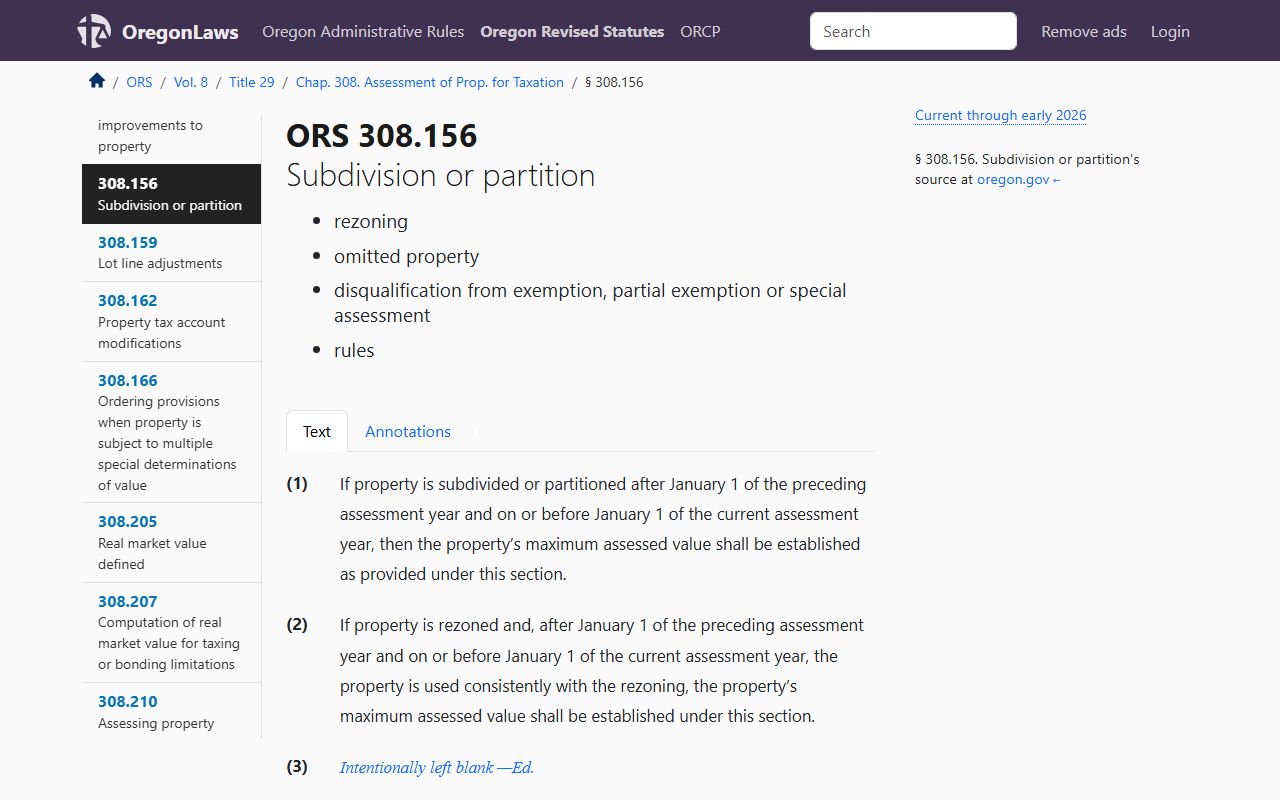
This statute caps annual increases at three percent for most properties. It is the backbone of Oregon's Measure 50 system and determines how Malheur County assessors calculate the taxable value of each parcel from year to year.
Recording Property Documents
The Malheur County Clerk's Office records deeds, mortgages, liens, and other property documents. Recording a document creates a public record of the transaction. This protects buyers, lenders, and other parties by establishing a clear chain of ownership.
Documents must meet Oregon's standards for format, legibility, legal descriptions, and notarization. The clerk's office can explain requirements before you submit paperwork. Once recorded, documents are indexed and available for public search. Title companies, lenders, and attorneys rely on these records to verify ownership and check for encumbrances before closing real estate deals.
Understanding Your Malheur County Tax Bill
Your property tax bill reflects the combined levies of every taxing district that serves your location. In Malheur County, these districts typically include the county government, a city (if you live in one), a school district, and various special districts like fire, irrigation, or library.
Oregon's Measure 5 caps tax rates at $5 per $1,000 of real market value for school levies and $10 per $1,000 for general government. When combined rates exceed these limits, compression reduces each district's share. The Oregon Department of Revenue publishes annual statistics showing compression effects across the state.
The assessed value on your bill follows the Measure 50 limits. It is the lesser of your real market value or your maximum assessed value. For long-term owners, the three percent annual cap under ORS 308.156 often keeps assessed value well below market value, resulting in a lower tax bill than a new buyer of a similar property might face.
Malheur County Tax Record Resources
Beyond the county assessor, several state resources can help with property tax research. The Oregon State Archives holds historical tax rolls and assessment records that may include older Malheur County documents. These are useful for genealogical research and understanding how property values have changed over time.
The statewide ORMAP system provides digital parcel maps for all Oregon counties. These maps show property boundaries, tax lot numbers, and geographic data. They are free to access and updated regularly. For questions about state tax policy or to request records not held at the county level, contact the Oregon Department of Revenue in Salem.
The Oregon Tax Court handles all property tax appeal cases in the state.
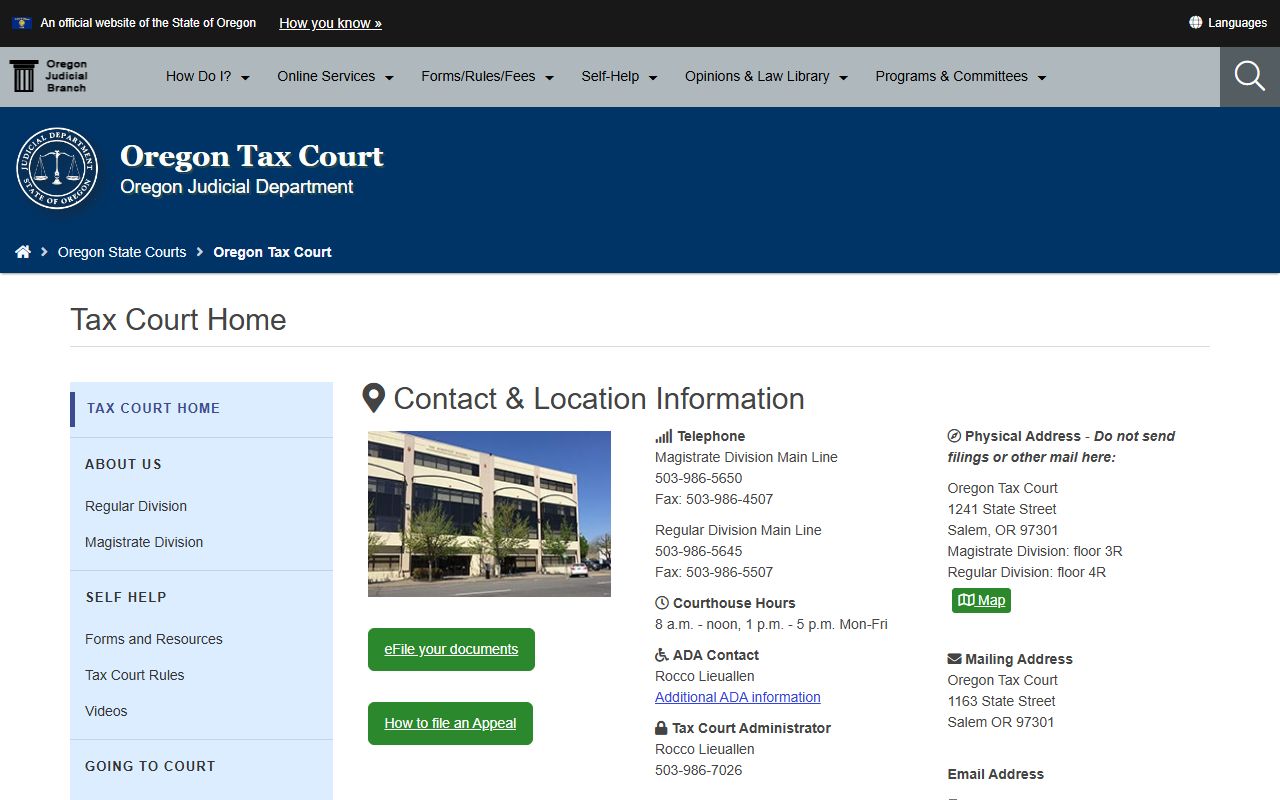
The court's Magistrate Division offers a less formal process for property owners challenging their assessments. Filing fees and procedures are listed on the court's website.