
Union County Tax Record Search
Union County property tax records cover all taxable parcels in this northeast Oregon county. The Union County Assessor and Tax Collector manage files for land and buildings in La Grande, Elgin, Island City, Cove, and Union. Searching these records gives owners and buyers direct access to assessed values, tax bills, and past sale data. The county provides both online and in-person options for viewing property tax records, making it simple to find the details you need for any parcel in Union County.
Union County Assessor and Tax Collector
The Union County Assessor and Tax Collector handles property valuation and tax collection for the entire county. Staff appraise residential lots in La Grande, farm ground in the Grande Ronde Valley, and forest land in the Blue Mountains. Each parcel gets a yearly review. The office tracks real market value, maximum assessed value, and assessed value for every tax account in Union County.
The county seat of La Grande is the base for all assessment work. Owners can visit in person to ask about their records or request copies. Phone and mail options are also open. The assessor runs programs for farm and forest special assessment, veteran exemptions, and senior deferrals. These programs can lower the tax burden for those who qualify.
Note: Union County property tax records are public, so any person may request access to parcel data during regular business hours.
How to Search Union County Property Tax Records
Union County offers an online property search tool that lets users look up parcels by address or account number. Results show the assessed value, tax amount, and owner of record. The system also displays GIS map data so you can see lot lines and nearby parcels. This tool runs around the clock, which means you can search Union County property tax records at any time.
Tax summary sheets are available for each account. These sheets list the full breakdown of taxes owed to each district. Schools, the city, the county, and special districts each get a share. Viewing a summary sheet is one of the best ways to understand how your Union County tax bill is split up.
For state-level resources, the Oregon Department of Revenue publishes guides on how property taxes work across all 36 counties. The screenshot below shows the DOR property tax page that provides context for Union County records.
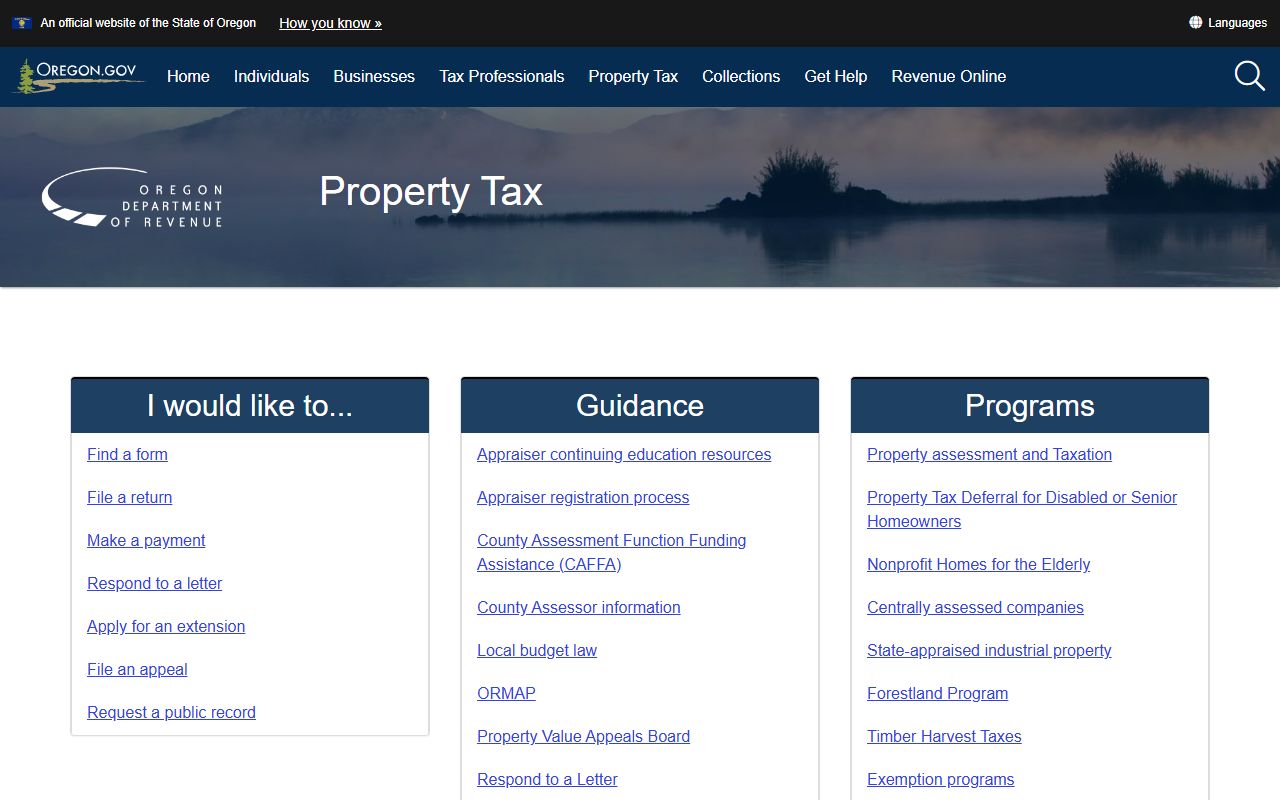
This state portal covers topics like Measure 5 rate caps, Measure 50 value limits, and the changed property ratio. All of these rules shape the values in Union County property tax records.
Property Tax Assessments in Union County
Every taxable parcel in Union County receives three values. Real market value reflects what the land and structures would sell for in the current market. Maximum assessed value grows by no more than 3% per year under ORS 308.156. Assessed value is the lesser of those two figures and forms the base for the tax bill.
Union County has a wide range of property types. Homes in La Grande and Island City sit next to large cattle ranches and timber tracts. Farm ground in the Grande Ronde Valley may carry special assessment values based on soil class and use rather than market price. These differences mean that two parcels of the same size can have very different tax bills depending on their classification in the Union County property tax records.
The assessor must also track new construction. When a home or building is added, its value enters the roll using the changed property ratio for Union County. This ratio ties the new parcel's maximum assessed value to the average gap between market and assessed values for similar properties in the county.
Union County Property Tax Payment Options
Tax bills go out each fall. Owners can pay the full amount by mid-November to earn a discount. Those who prefer to spread the cost can choose a three-part plan with payments due in November, February, and May. Late payments bring interest charges that add to the total owed.
Union County accepts payments online, by mail, and in person. The county website provides a portal for electronic checks and card payments. Mailed payments should be sent to the tax collector's office in La Grande. In-person payments are taken at the county building during business hours.
Payment history is part of the Union County property tax records. Owners can verify that past payments posted correctly by checking their account online or calling the office. Keeping track of payment status helps avoid penalties and protects your standing with the county.
Note: If taxes remain unpaid for three consecutive years, Oregon law allows the county to begin foreclosure proceedings on the property.
Appealing Union County Property Tax Values
Owners who disagree with their Union County property tax assessment have the right to appeal. The first step is to call the assessor's office. Many issues are resolved through informal review when the owner shares new sale data or points out errors in the property description.
If informal talks do not settle the matter, the owner can file a formal appeal with the Union County Property Valuation Appeals Board. The filing window opens when tax statements arrive in late October and closes on December 31. The board holds hearings in early spring. Owners may appear in person, submit written evidence, or send a representative.
Decisions from the board can be appealed to the Oregon Tax Court within 30 days. The Magistrate Division provides a straightforward process for most value disputes. Evidence of market value, such as recent sales of similar Union County properties, is key to a strong case. The Regular Division handles more complex legal questions and appeals from the Magistrate Division.
Recording Property Documents in Union County
The Union County Clerk's Office manages document recording for real property. Deeds, mortgages, liens, and easements are all filed here. Each recorded document creates a public record that helps prove ownership and tracks the chain of title for every parcel.
Recording fees follow state guidelines. Documents must meet formatting rules, include a full legal description, and carry proper notarization. The clerk rejects filings that do not meet these standards. E-recording may be offered through approved vendors, which allows title companies and lenders to submit documents without a trip to the office.
The Oregon State Archives holds older Union County property documents that have been transferred from local storage. Researchers tracing land ownership back to the 1800s may find archived tax rolls and deed indexes useful for building a complete history.
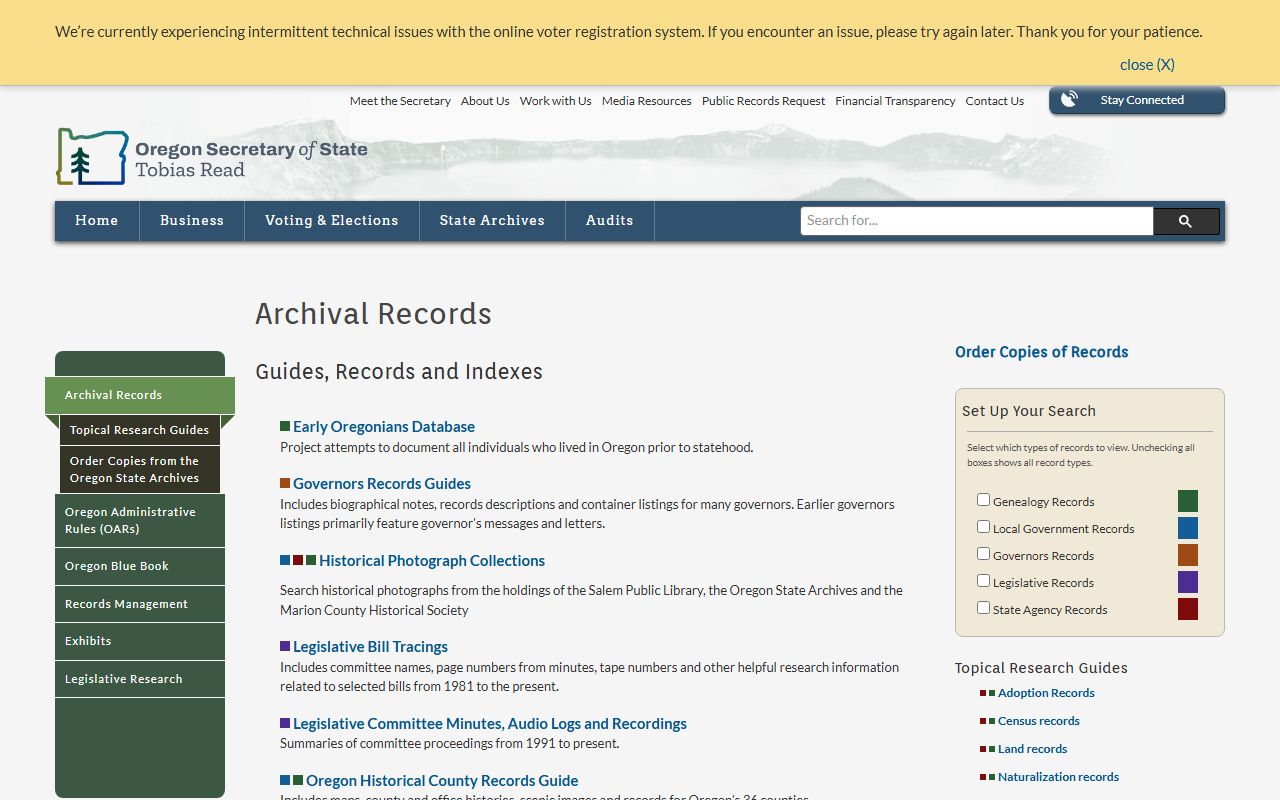
These archival records fill gaps in the local files and provide context for how Union County property ownership has changed over time.
Union County Exemptions and Special Programs
Several programs can reduce the tax burden on qualifying Union County parcels. The assessor's office handles applications for all exemption and deferral programs. Each program has its own rules and deadlines, so early contact with the office is wise.
- Senior citizen property tax deferral for those who meet age and income rules
- Disabled veteran exemption based on service-related disability rating
- Farm use special assessment for qualifying agricultural land
- Forestland special assessment for managed timber parcels
- Active duty military exemption for service members
Under ORS 307.030, all real and personal property in Union County is subject to tax unless a specific exemption applies. Religious, charitable, and government properties may qualify for full or partial removal from the tax roll. However, having a federal tax-exempt status does not guarantee a property tax exemption in Oregon.
Oregon's Tax Framework and Union County
Oregon's property tax system rests on two voter-approved measures. Measure 5, passed in 1990, set rate caps at five dollars per thousand of real market value for schools and ten dollars per thousand for general government. Measure 50, passed in 1997, froze assessed values and capped yearly growth at 3%. Together, these measures shape every Union County tax bill.
The ORS Chapter 306 framework gives the Oregon Department of Revenue authority to oversee county assessors. The state conducts ratio studies each year to check that Union County assessments meet standards for fairness. If values drift out of line, the state can order corrections.
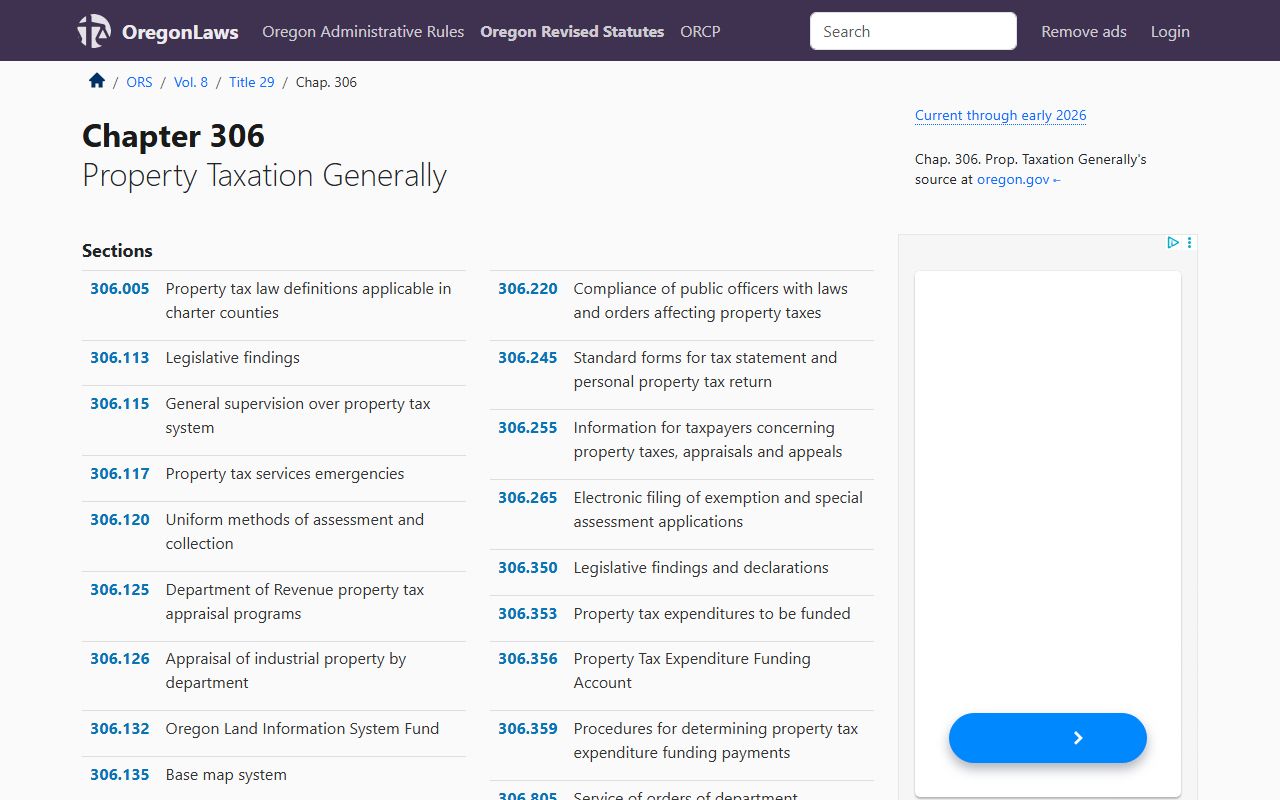
This legal framework ensures that Union County property tax records follow the same rules as every other county in the state. Owners benefit from consistent standards that promote fair treatment across all property types.
Note: Compression may reduce taxes collected by some Union County districts when total levies exceed Measure 5 rate limits.